Full analysis of coal thermal assay, common technical problems and solutions
Read :
Release time : 2026-04-18
Coal heat (also known as calorific value) is the core indicator to measure the quality of coal, which directly determines the use value and economic value of coal. It is widely used in trade settlement, production ratio and cost control in electric power, metallurgy, chemical industry, heating and other industries. For enterprises, accurately mastering the knowledge of coal heat assay can not only avoid economic losses caused by test errors, but also optimize coal use schemes and improve production efficiency. This article explains in detail the core points and standard processes of coal heat assay, as well as common technical problems and solutions in practice, providing practical reference for enterprises to test.
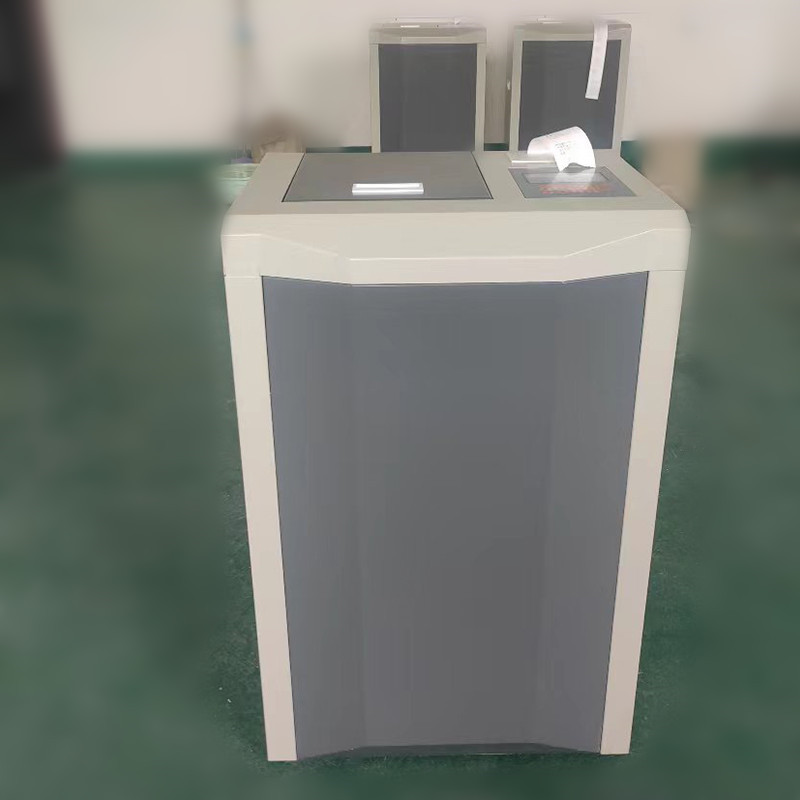
The essence of coal heat is the heat released per unit mass of coal after complete combustion. The commonly used unit is kcal/kg (kcal/kg) or kilojoule/kg (kJ/kg). The industry mainly detects two indicators: high heat generation and low heat generation. High heat generation is the total heat after the water vapor in the combustion products condenses into water and releases latent heat after the coal is completely burned; low heat generation is the actual available heat after deducting the latent heat of water vapor. It is also the most commonly used reference index in the production of enterprises, which is directly related to the combustion efficiency of boilers, power generation and coal costs.
The standard process of coal calorific assay should strictly follow GB/T 213-2008 "Methods for the determination of coal calorific value", and the core steps include coal sample preparation, instrument calibration, oxygen bomb combustion, temperature measurement, and result calculation. First, the coal sample needs to be prepared into an air-dried coal sample with a particle size of less than 0.2mm to ensure that the sample is uniform and representative, so as to avoid incomplete combustion due to uneven particle size and affect the detection results; secondly, before using the oxygen bomb calorimeter, it is necessary to use benzoic acid (standard calorific value substance) to calibrate the heat capacity of the instrument to ensure that the accuracy of the instrument meets the requirements, which is the premise of accurate testing; then, weigh a certain quality of coal sample into the oxygen bomb, fill it with high-pressure oxygen (pressure control at 2.8-3 MPa), put it into the calorimeter inner cylinder, and completely burn the coal sample through the ignition device to record the water temperature change of the inner cylinder; finally, according to the heat capacity, coal sample quality and water temperature change, calculate the high calorific value of the coal, and then combine the moisture and hydrogen content of the coal sample to convert the low calorific value
In the actual test process, many companies will encounter various technical problems, resulting in excessive deviation of test results, affecting production and trade decisions. Here are the four most common types of technical problems and detailed solutions:
One is the error caused by the irregular preparation of coal samples. This is the most common problem, mainly manifested as the particle size of the coal sample does not reach 0.2mm, the mixing is not uniform, or the water loss and pollution of the coal sample during the preparation process. For example, some companies do not fully pulverize the coal sample to save time, and the large particle coal sample cannot be completely burned in the oxygen bomb, which will lead to low calorific value measurement; if impurities are mixed during the preparation of the coal sample, or the water evaporates due to long-term exposure to the air, the actual calorific value of the coal sample will not match the detected value. Solution: Prepare coal samples in strict accordance with GB/T 474-2008 "Preparation Method of Coal Samples" to ensure uniform particle size and no impurities. Seal and store them in time after preparation to avoid moisture loss and oxidation.
The second is that the calibration and maintenance of the oxygen bomb calorimeter are not in place. The instrument is not regularly calibrated, the heat capacity deviation is too large, or the oxygen bomb seal is not strict, and the ignition system failure will affect the test results. For example, the aging of the oxygen bomb seal ring leads to air leakage, and the coal sample is burned with insufficient oxygen, which will cause incomplete combustion and low calorific value measurement; the water quality of the inner cylinder of the calorimeter deteriorates, and the mixing system fails, which will lead to inaccurate water temperature measurement, which will then affect the result calculation. Solution: Calibrate the heat capacity of the instrument with benzoic acid at least once a month, check the sealing of the oxygen bomb before each test, replace the sealing ring and ignition wire regularly, clean the inner cylinder and replace the inner cylinder water in time to ensure that the instrument is in
The third is improper control of the laboratory environment. According to the requirements of the national standard, the room temperature of the calorimeter room should be maintained at 15-30 ° C, and the change of room temperature should not exceed 1 ° C for each measurement, and avoid direct sunlight, excessive air convection and strong magnetic field interference. If the ambient temperature fluctuates too much, it will cause the heat dissipation of the calorimeter to change and the measurement results will be deviated; in a high humidity environment, the coal sample is easy to absorb moisture, which will also lead to a decrease in the measured value of calorific value. Solution: Install high-precision air conditioning and temperature and humidity control system in the calorimeter room, monitor and adjust the ambient temperature and humidity in real time, avoid direct sunlight and air convection, and stay away from strong magnetic field equipment (such as welding machines
The fourth is the result calculation error. Some laboratory personnel are not familiar with the conversion formula of high and low calorific value, or ignore the influence of coal sample moisture and hydrogen content, resulting in wrong calculation results. For example, failing to deduct the latent heat corresponding to coal sample moisture and hydrogen content will make the calculation value of low calorific value too high, misleading enterprises to use coal ratio. Solution: Master the conversion formula, accurately determine the moisture and hydrogen content of coal samples, strictly substitute relevant parameters when calculating, and do a good job of parallel sample determination to ensure accurate results (the allowable error of parallel samples does not exceed 120J/g).
In addition, enterprises also need to pay attention to the preservation of coal samples. Air-dried coal samples should be sealed and stored in a dryer for no more than 7 days to avoid a decrease in calorific value due to oxidation. At the same time, laboratory personnel need to undergo professional training to be familiar with instrument operation and national standard specifications to avoid errors caused by operation errors. Mastering the above knowledge can effectively improve the accuracy of coal heat testing, help enterprises accurately control coal quality, reduce production costs, and avoid trade disputes.
Related News
View More >>
 How to read calorimeter data
08 .30.2026
First, understand the basic data indicators of the calorimeterThe core data of t
 What is the design principle of a calorimeter?
08 .30.2026
As a core instrument for accurately measuring heat, a calorimeter is widely used
 What is the harm of lack of water in the calorimeter?
08 .30.2026
In all kinds of calorific value detection work, the calorimeter plays a crucial
 What is the input interface of the calorimeter?
08 .30.2026
The central role of the calorimeter input interfaceThe input interface of the ca