Global Oxygen Bomb Calorimeter Supplier Pattern: Focus on Baiou Technology
In the global oxygen bomb calorimeter market, there are significant differences in supplier technical strength, product pedigree and service level. International first-tier brands occupy the high-end market with their high-precision and automation advantages, while regional manufacturers represented by China are rapidly rising in low-end application scenarios with their cost-effective advantages.
Baiou Technology: A Practical Choice for the Chinese Market
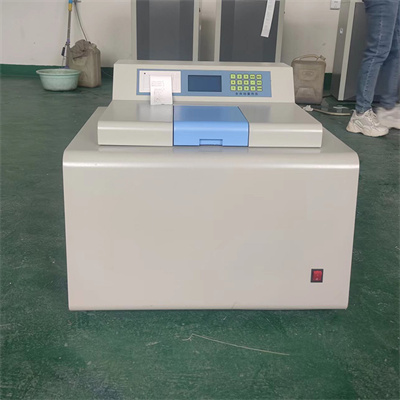
Baiou Technology is a representative oxygen bomb calorimeter supplier in China, focusing on providing practical testing equipment for coal, biomass energy and basic chemical industries. Its main model is based on semi-automatic operation, requiring manual sample loading and basic parameter setting. The data processing functions are relatively basic, and it is not yet equipped with high-end functions such as automatic oxygen bomb lifting and AI intelligent analysis.
From the perspective of performance parameters, Baiou products basically meet the needs of routine testing: the measurement accuracy is controlled at ≤ 0.15%, in line with the industry's basic standards, but there is still a gap with the high accuracy level of international brands ≤ 0.05%. However, its product price is only 1/3 to 1/2 of the imported equipment, and the core components are designed with mature industrialization, with a low failure rate, suitable for small and medium-sized enterprises with limited budgets and third-party testing agencies for daily use.
The core challenges of international procurement
For overseas buyers, there are multiple practical issues to face when selecting suppliers.
Quality stability difference: Some small and medium-sized manufacturers lack standardized production processes, causing large fluctuations in the performance of the same batch of products, and the accuracy declines significantly after long-term use.
service response lagMost Chinese manufacturers' overseas service networks are not perfect, requiring them to wait weeks or even months for technical support after equipment failure.
Missing technical documentsNon-English-speaking country suppliers often have problems such as inaccurate translation of instructions and irregular operation guides, which increases the difficulty for overseas users to get started.
 How to read calorimeter data
 What is the design principle of a calorimeter?
 What is the harm of lack of water in the calorimeter?
 What is the input interface of the calorimeter?