Sulfur is a harmful impurity in coal. Its content is directly related to environmental emissions, equipment corrosion and product quality. It is also one of the must-measure indicators in coal testing. For electric power, metallurgy, chemical and other industries, excessive sulfur content will lead to boiler corrosion, flue blockage, increase environmental protection treatment costs, and even face environmental penalties; In coal trade, sulfur content is an important basis for pricing, and excessive test errors may lead to economic losses for enterprises. This article details the knowledge and standard methods of coal sulfur content testing, as well as common technical difficulties and solutions in practice, to help enterprises improve the accuracy of sulfur content testing and avoid related risks.
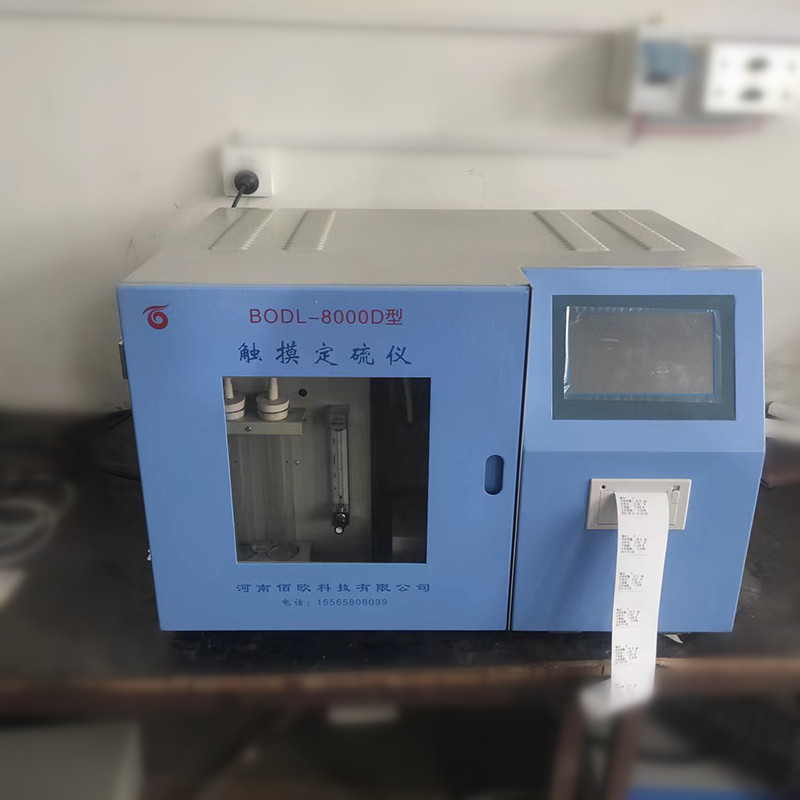
The sulfur in coal is mainly divided into organic sulfur, inorganic sulfur (pyrite sulfur, sulfate sulfur) and elemental sulfur, of which pyrite sulfur and organic sulfur are the main components, accounting for more than 90% of the total sulfur content of coal. The analytical indicators of sulfur content mainly include total sulfur (St), organic sulfur (So), pyrite sulfur (Sp) and sulfate sulfur (Ss). Among them, total sulfur is the most commonly used detection index, which directly reflects the total sulfur content in coal. The national standard has clear restrictions on the total sulfur content of coal for different purposes (for example, the total sulfur content of coal for power generation generally does not exceed 1.5%).
The standard method of coal sulfur content assay follows GB/T 214-2007 "Determination method of total sulfur in coal", which stipulates three commonly used determination methods, namely Eskar method, Coulomb titration method and high temperature combustion neutralization method. Different methods are suitable for different scenarios, and enterprises can choose according to their own needs.
The Eskar method is an arbitration method that is suitable for all coal varieties. The results are accurate but the operation process is cumbersome and time-consuming (about 4-6 hours). Its core principle is to mix and burn the coal sample with the Eskar reagent (2 parts of light magnesium oxide + 1 part of anhydrous sodium carbonate). The sulfur in the coal is converted into sulfate, and then the total sulfur content is calculated by precipitation, filtration and weighing. This method is suitable for laboratory precision detection and trade arbitration. The disadvantage is that it is less efficient and is not suitable for batch sample detection.
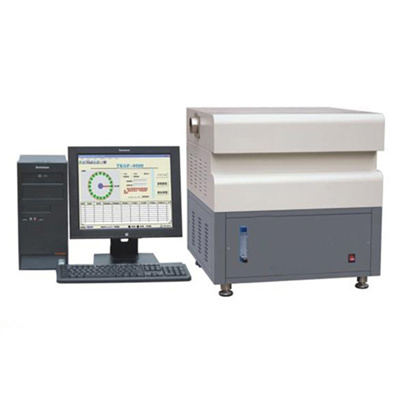
Coulomb titration is the mainstream method in the industry, with high degree of automation and fast detection speed (about 10-15 minutes for each sample). It is suitable for batch sample detection and is widely used in coal mines, power plants, coal farms and other enterprises. Its principle is that the coal sample is burned and decomposed in the air flow under the action of a catalyst, and the sulfur is converted into sulfur dioxide, which is absorbed by the potassium iodide solution. Titration is carried out by electrolysis of the iodine produced by the potassium iodide solution, and the total sulfur content is calculated according to the electricity consumed by electrolysis. The method is simple to operate and efficient, but requires high instrument accuracy and operation specifications.
The high temperature combustion neutralization method is suitable for coal with high sulfur content (total sulfur content > 4%). The principle is that the coal sample is burned in an oxygen stream under the action of a catalyst, and the sulfur is converted into sulfur oxides, which are absorbed by hydrogen peroxide solution to form sulfuric acid. Titration with sodium hydroxide standard solution, and calculate the total sulfur content according to the consumption of sodium hydroxide. This method has a fast detection speed and is suitable for batch detection of high-sulfur coals.
In practice, the technical difficulties and solutions commonly encountered in sulfur content testing are as follows:
Difficulty 1: The coal sample is not burned completely, resulting in a low measurement value of sulfur content. The main reason is that the coal sample particle size is too large, the combustion temperature is insufficient, or the oxygen (air) supply is insufficient, resulting in the sulfur in the coal is not completely converted into sulfur oxides. For example, in the coulomb titration method, if the temperature of the tubular high temperature furnace does not reach 1150 ° C (standard temperature), or the air flow rate is insufficient, it will lead to insufficient sulfur combustion and low detection results. Solution: The coal sample is pulverized to less than 0.2mm to ensure uniform particle size; the combustion temperature is strictly controlled (coulomb titration method 1150 ° C, high temperature combustion neutralization method 1200 ± 10 ° C), and the air (oxygen) flow rate is adjusted to the standard range (coulomb titration method 100-150ml/min) to ensure that the coal sample is completely
Difficulty 2: Insufficient purity of the reagent or improper preparation affects the test results. In the Eskar method, the uneven mixing of the Eskar reagent and the substandard purity will lead to incomplete sulfur conversion; in the coulometric titration method, the concentration deviation of the potassium iodide solution and the failure of the electrolyte will lead to inaccurate titration; in the high temperature combustion neutralization method, the concentration of the sodium hydroxide standard solution is unstable, which will affect the calculation results. Solution: Use chemical reagents that meet the requirements of the national standard, prepare the reagents in strict accordance with the standard process, regularly calibrate the concentration of the reagents (such as the sodium hydroxide standard solution is calibrated once a week), and the prepared reagents are sealed and stored to avoid failure.
Difficulty 3: Errors caused by instrument failure. The electrolytic cell of the Coulomb titrator leaks air, the electrodes are polluted, and the position deviation of the thermocouple of the tubular high-temperature furnace will lead to fluctuations in the test results; in the Eskar method, the crucible is not washed and the burning temperature is uneven, which will lead to inaccurate measurement of the precipitation amount. Solution: Check the instrument and equipment regularly. The Coulomb titrator checks the sealing of the electrolytic cell before each use and cleans the electrodes; the tubular high-temperature furnace regularly calibrates the thermocouple to ensure accurate temperature; the crucible is thoroughly washed and burned to constant weight before use to avoid residual impurities affecting the results.
Difficulty 4: The blank test fails. The blank test is the key to eliminating the interference of reagents, instruments, environments and other factors. If the blank test results exceed the standard, the test results will be biased. The main reasons are that the reagents contain impurities, the instruments are contaminated, or the experimental water does not match
Meet the requirements. Solution: Blank test is carried out simultaneously with sample testing, using sulfur-free reagents and distilled water. Thoroughly clean the instruments and utensils before the experiment to ensure that the blank test results meet the requirements of the national standard (blank value does not exceed 0.005%).
In addition, the laboratory personnel should note that the precision requirements of different methods are different. The Eskar method, coulomb titration method and high temperature combustion neutralization method have a repeatability limit of 0.05% when the sulfur content is ≤ 1.50%; when the sulfur content is 1.50% -4.00%, the repeatability limit is 0.10%. Parallel sample testing must meet this requirement. At the same time, the Eskar method must be used in arbitration analysis to avoid disputes caused by different methods. Mastering the above technical points can effectively improve the accuracy of sulfur content testing and help enterprises control coal quality, production compliance and avoid trade risks.
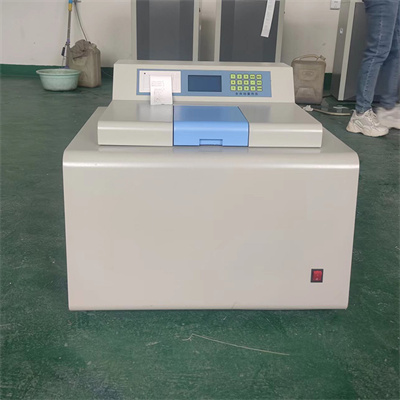 How to read calorimeter data
 What is the design principle of a calorimeter?
 What is the harm of lack of water in the calorimeter?
 What is the input interface of the calorimeter?