Core knowledge, common problems and precise control skills of coal ash assay
Read :
Release time : 2026-04-18
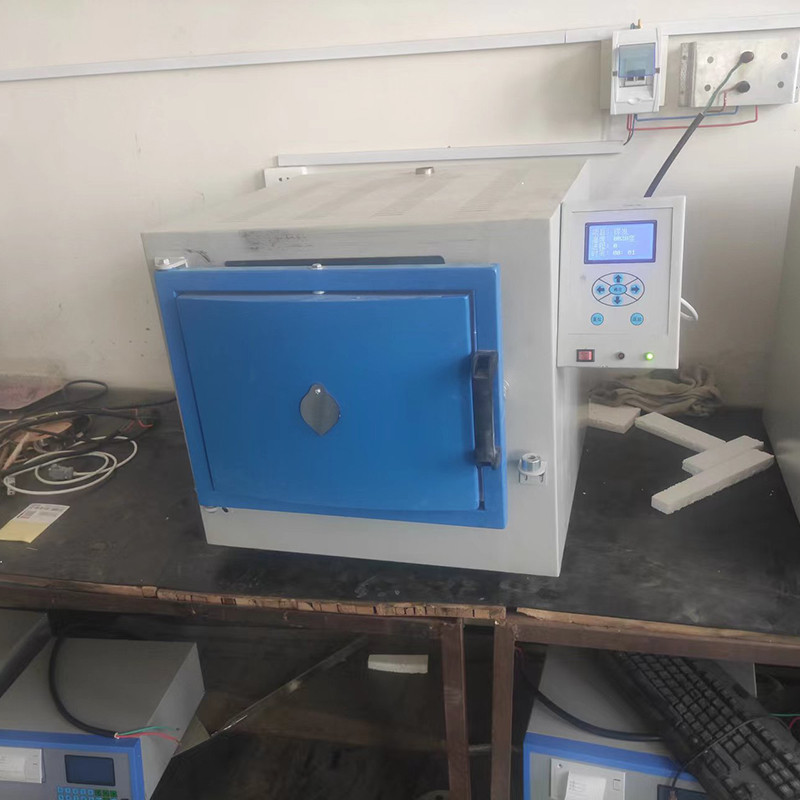
Ash content is the residual inorganic mineral after coal combustion. It is one of the important indicators to measure the quality of coal. Its content directly affects the calorific value, combustion efficiency and industrial application value of coal. For enterprises, excessive ash content will lead to a decrease in coal calorific value, an increase in slag discharge, and an increase in transportation and treatment costs. In the metallurgical industry, high ash content will affect coke strength and blast furnace production efficiency. In the coal trade, ash content is one of the core basis for pricing, and test errors will directly lead to economic losses. This article explains in detail the core knowledge and standard process of coal ash test, as well as common problems and precise control skills in practice, providing practical test guidance for enterprises.
Coal ash is not an inherent component of coal, but the residue of minerals (such as clay, quartz, pyrite, etc.) in coal after chemical decomposition and oxidation during combustion, which is divided into external ash and internal ash. Extrinsic ash is rock fragments from the top baseplate and gangue, which is related to coal mining methods and can be mostly removed by sorting; intrinsic ash is the inorganic matter contained in the original coal-forming plants themselves. The higher the intrinsic ash content, the worse the selectivity of coal. Common detection indicators of ash include air-dried base ash (Aad), dry base ash (Ad) and received base ash (Aar). Among them, air-dried base ash is the most commonly used detection index, which directly reflects the ash content of coal samples in the air-dried state.
The standard process for coal ash testing follows GB/T 211-2017 "Industrial Analysis Methods of Coal". The core method is the slow ashing method, which is suitable for all coal varieties. Its process is simple and the results are accurate, making it the most commonly used method in the industry. The specific steps are as follows: First, prepare an air-dried coal sample with a particle size of less than 0.2mm, weigh 1 ± 0.1g of coal sample (accurate to 0.0002g), and spread it evenly in a porcelain ash dish that has been pre-burned to a constant weight to ensure that the quality of the coal sample per square centimeter does not exceed 0.15g; secondly, send the ash dish into a muffle furnace with a temperature of not more than 100 ° C, leave a 15mm gap in the furnace door, and slowly heat up to 500 ° C in not less than 30 minutes, and keep it at this temperature for 30 minutes (so that the organic sulfur and iron sulfide are fully oxidized and discharged); then, continue to heat up to 815 ± 10 ° C, and burn for 1 hour to completely decompose the carbonate; finally, remove the ash dish, cool it in the air for 5 minutes, and then put it in a dryer to cool to room temperature (about 20 minutes) and weigh it. Repeat the burning to a constant weight (the difference between the two weighing does not exceed 0.0010g), and calculate the ash content according to the quality of the coal sample and the mass of the residue after burning (calculation formula: Aad = m1/m × 100%, where m1 is the mass of the residue after burning and m is the mass of the coal sample).
In the actual testing process, ash testing is prone to problems such as excessive result deviation and incomplete ashing. The following are the five most common types of problems and precise control techniques:
Problem 1: The coal sample is not completely ash, resulting in a low ash measurement value. The main reason is that the heating rate is too fast, the burning temperature is insufficient, or the coal sample is laid thick, resulting in incomplete decomposition of the minerals in the coal. For example, too fast heating speed will cause the coal sample to deflagrate, some organic matter will be taken away before complete combustion, and the residual carbon will make the ash measurement value low; the coal sample is laid thick, and the bottom coal sample cannot be fully exposed to oxygen, resulting in incomplete ash. Control skills: Strictly follow the slow ashing procedure, from room temperature to 500 ° C within 30 minutes, keep at 500 ° C for 30 minutes, and then rise to 815 ± 10 ° C for 1 hour; the coal sample is laid evenly, and the thickness does not exceed 0.15g/cm ² to ensure full contact with oxygen.
Problem 2: Poor ventilation in the muffle furnace results in high ash measurement values. Poor ventilation in the muffle furnace can cause sulfur oxides to not be discharged in time, and react with calcium oxide in the ash to form calcium sulfate, which increases the quality of the residue and makes the ash measurement value high. Control skills: Make sure that the muffle furnace is well ventilated, install a qualified chimney, leave ventilation holes in the furnace door, and maintain air circulation during the ashing process to allow sulfur oxides to be discharged in time.
Problem 3: Improper use of the gray dish affects the test results. If the gray dish is not burned to a constant weight, there are residual impurities on the inner wall, or it is not cooled and weighed in time after burning, it will lead to weighing errors. Control skills: The gray dish should be burned to a constant weight at 815 ± 10 ° C before use, cleaned and dried; after the burned gray dish is cooled in the air for 5 minutes, it is immediately put into a dryer to cool to room temperature to avoid moisture absorption affecting the weighing.
Problem 4: The influence of environmental humidity results in a high ash measurement value. In a high humidity environment, the ash after burning is easy to absorb moisture in the air, which increases the weighing quality and leads to a high ash measurement value. Control skills: Keep the laboratory dry and control the relative humidity below 60%; The dryer is filled with color-changing silica gel and replaced regularly to ensure the drying effect; Weigh the ash dish in time after cooling to avoid long-term exposure to air.
Problem 5: The inspection personnel's operation is not standardized, resulting in errors. For example, the balance is not calibrated during weighing, the coal sample is not weighed accurately, or the inspection burning is not complete, which will affect the accuracy of the results. Control skills: Calibrate the electronic balance (sensitivity 0.0001g) before the test, and strictly follow the operating procedures when weighing; when the ash content is lower than 15%, inspection burning is not required, and when it is higher than 15%, inspection burning is required for 20 minutes each time until constant weight.
In addition, enterprises also need to understand the classification standards of coal ash. Different grades of coal ash content are different (such as 1-grade ash content ≤ 5.00%, 2-grade 5.01-6%), and coal with suitable ash can be selected according to their own production needs. At the same time, regularly maintain muffle furnaces, balances, dryers and other equipment to ensure that the accuracy of the instrument meets the requirements. Mastering the above ash assay knowledge and control skills can effectively improve the accuracy of detection, help enterprises control coal quality, reduce costs, and avoid trade risks.
Related News
View More >>
 How to read calorimeter data
08 .30.2026
First, understand the basic data indicators of the calorimeterThe core data of t
 What is the design principle of a calorimeter?
08 .30.2026
As a core instrument for accurately measuring heat, a calorimeter is widely used
 What is the harm of lack of water in the calorimeter?
08 .30.2026
In all kinds of calorific value detection work, the calorimeter plays a crucial
 What is the input interface of the calorimeter?
08 .30.2026
The central role of the calorimeter input interfaceThe input interface of the ca