What does the calorimeter detect?
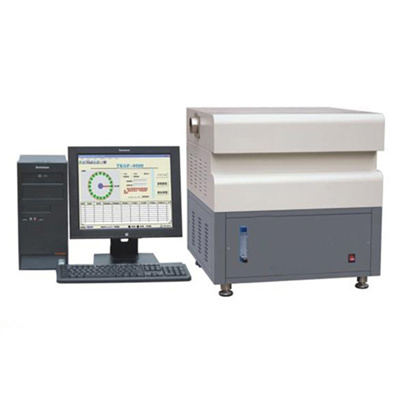
As a core instrument for accurately measuring the change of heat in materials, calorimeters play a key role in various fields such as energy, chemical industry, and food. Their detection content is directly related to product quality control and efficient use of energy. Here is a clear summary of the core detection items of calorimeters.
Core testing item 1: Combustion calorific value testing
Combustion calorific value is the most basic and important detection index of calorimeter, mainly for coal, oil, biomass fuel and other combustible substances. By simulating the working conditions of complete combustion of substances, the heat released by complete combustion of unit mass substances is accurately determined. This data is crucial for fuel selection and boiler combustion efficiency calculation of thermal power plants, directly determines energy utilization costs and power generation efficiency, and is the core detection basis of the energy industry.
Core testing item 2: Measurement of specific heat capacity
The specific heat capacity reflects the ability of a substance to absorb or release heat. A calorimeter can accurately control temperature changes and combine heat transfer data to calculate the specific heat capacity of solids and liquids. In chemical production, specific heat capacity data is a key parameter for designing heat exchange equipment and optimizing process flow, which can help enterprises accurately control the reaction temperature and ensure production stability and safety.
Core testing item 3: Reaction heat measurement
For various chemical reactions in the chemical and pharmaceutical industries, calorimeters can monitor the heat change during the reaction process in real time, and determine the reaction heat, heat of dissolution, and other data. Whether it is an exothermic reaction or an endothermic reaction, accurate reaction heat data can help enterprises optimize reaction conditions, avoid safety hazards caused by heat loss, and improve product yield and quality.
Core testing item 4: Phase change latent heat detection
Substances absorb or release a large amount of heat during the phase change process (such as solid to liquid, liquid to gas), that is, latent heat of the phase change. The calorimeter can accurately capture this heat change, providing core data support for refrigerant research and development, energy storage material design, and helping related industries achieve efficient energy storage and utilization.
The test data of the calorimeter is not only the "scale" of product quality, but also an important basis for the industry to reduce costs and increase efficiency and ensure safety. Whether it is fuel control in the energy industry, or process optimization in the chemical industry and pharmaceuticals, it is inseparable from the accurate detection of the calorimeter. Only by mastering its core detection content can we better exert the value of the instrument and promote the development of the industry.
 How to read calorimeter data
 What is the design principle of a calorimeter?
 What is the harm of lack of water in the calorimeter?
 What is the input interface of the calorimeter?