Do you need to add water to the calorimeter?
When conducting calorimetry-related experiments in the laboratory, the calorimeter is the core testing equipment, and many operators will wonder: Does the calorimeter need to add water? The answer is that some calorimeters must add water, and the operation of adding water directly determines the accuracy of the experimental results. The following is an explanation of the principle, type, and operation points.
First, the core principle of adding water to the calorimeter
The core function of a calorimeter is to accurately measure the heat released or absorbed by the reaction of a substance, and water is the key medium for heat transfer. Most calorimeters use water as the calorimeter medium, using the characteristics of stable specific heat capacity and uniform heat absorption and heat release of water to calculate the heat value by monitoring the change of water temperature. Without adding water, the instrument cannot complete the reception and transfer of heat, and it cannot achieve the core detection function.
Second, the type of calorimeter that needs to be added with water
Not all calorimeters need to add water, mainly depending on the structure and detection principle of the instrument. The common oxygen bomb calorimeter is a typical representative of the need to add water. When this type of instrument detects the calorific value of solid fuels (such as coal and coke), the sample needs to be burned in the oxygen bomb. The heat released by combustion will be transferred to the water jacket outside the oxygen bomb. The water temperature change is monitored by a high-precision temperature sensor, and then the calorific value is calculated. In addition, some constant temperature calorimeters also need to add water to maintain a constant temperature environment to ensure the detection stability.
III. Key operating specifications for adding water to a calorimeter
1. Precise control of the amount of water added: adding too much water can easily lead to too slow heat diffusion, which affects the accuracy of temperature monitoring; adding too little water cannot fully absorb the heat released by the combustion of the sample, resulting in heat loss and low test results. It is necessary to add water strictly according to the capacity marked in the instrument manual, usually with a clear scale line, and add water to the scale line.
2. Strict requirements for water quality: distilled or deionized water must be used. Minerals and impurities contained in tap water can affect the specific heat capacity of the water, and may also corrode the internal components of the instrument, interfering with the accuracy of the temperature sensor, resulting in experimental errors.
3. Inspection steps after adding water: After adding water, check whether the pipeline is leaking and the seal is intact to avoid water leakage during the experiment and cause heat loss, and at the same time prevent the core components of the instrument from being damaged due to water ingress.
IV. Types of calorimeters without adding water
With the development of technology, some new types of calorimeters use non-aqueous media or solid calorimeter modules, which do not require water addition. However, the application scenarios of such instruments are limited, and they are mostly used for special sample testing. Conventional laboratory testing is still based on calorimeters that require water addition.
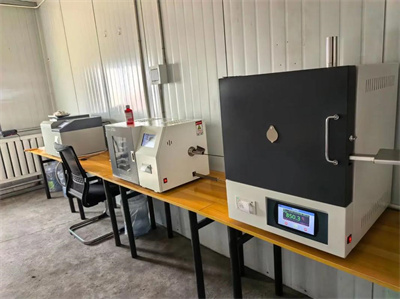
In short, most commonly used calorimeters need to add water, and the operation of adding water is a key step to ensure the accuracy of the experiment. Operators must master the water addition specifications and strictly follow the instrument instructions to ensure the stable operation of the calorimeter and obtain reliable detection data.
 How to read calorimeter data
 What is the design principle of a calorimeter?
 What is the harm of lack of water in the calorimeter?
 What is the input interface of the calorimeter?