How does a calorimeter ignite?
In all kinds of calorific value testing experiments, calorimeters play a key role, and the ignition link is the core premise to ensure the accurate development of the experiment. It is crucial to master the correct ignition method.
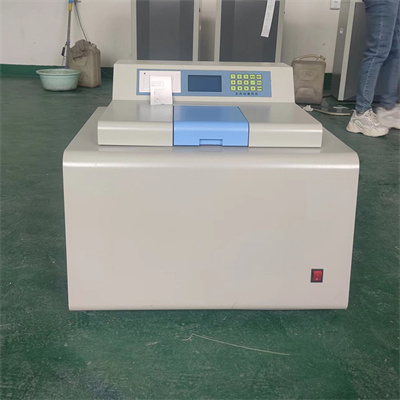
Preparations before ignition
Before ignition, a comprehensive inspection of the calorimeter is required. Check whether the appearance of the instrument is damaged, and whether the connecting lines are stable, especially the ignition line and the oxygen supply line, to ensure that there is no loosening or leakage. At the same time, prepare a sufficient amount of ignition wire that meets the specifications. The common nickel-chromium ignition wire has the characteristics of high temperature resistance and easy ignition, which can meet the experimental needs. It is also necessary to confirm the packaging status of the sample to ensure that the sample is tightly wrapped to avoid scattered during ignition and affect the experimental results.
Core ignition operation steps
1. Install the ignition wire: Fix one end of the ignition wire on the ignition electrode of the calorimeter, and the other end passes through the reserved hole of the sample crucible, and gently wraps it around the surface of the sample. Note that the winding force should be moderate to ensure that the ignition wire is in full contact with the sample, and the sample cannot be deformed due to excessive extrusion.
2. Set ignition parameters: According to the sample characteristics, set the appropriate ignition current and ignition time on the calorimeter control panel. The ignition points of different samples vary, such as coal samples, the ignition current is usually set at 3-5A, and the ignition time is controlled at 1-2 seconds. For specific parameters, please refer to the instrument manual and sample testing standards.
3. Start the ignition procedure: After confirming that the parameters are correct, press the ignition start button, the instrument will automatically connect the ignition circuit, and the ignition wire will quickly heat up and turn red under the action of current, and then ignite the sample. During the ignition process, pay attention to the running status of the instrument. If the ignition fails, turn off the power immediately, and check the fault before reoperating.
Precautions after ignition
After the sample is ignited, do not open the calorimeter door immediately. Wait for the instrument to automatically complete the heat collection. After the data shows stability, open the furnace door according to the operation process to clean up the remaining sample residue and ignition wire. At the same time, record the key data in the ignition process in time, including ignition current, ignition time, sample ignition status, etc., to provide a basis for subsequent experimental analysis.
By mastering the above calorimeter ignition methods and following the steps strictly, the ignition work can be completed efficiently and accurately, which will lay a solid foundation for the calorific value detection experiment.
 How to read calorimeter data
 What is the design principle of a calorimeter?
 What is the harm of lack of water in the calorimeter?
 What is the input interface of the calorimeter?