How to adjust the calorimeter?
Preparation before commissioning of calorimeter
Before commissioning the calorimeter, make sure that the instrument is placed in a stable, dry and free of strong electromagnetic interference, and check whether the power connection is stable. In addition, prepare a standard material, such as benzoic acid, whose calorific value is known and stable, which is the key to calibrating the calorimeter. Also make sure that the components of the instrument are not damaged and the oxygen bomb is well sealed to avoid affecting the debugging results due to component problems.
Calorimeter calibration operation
Calibration is the core link of the calorimeter debugging. First press the standard benzoic acid tablet, accurately weigh its quality and record it. Put the pressed benzoic acid tablet into the oxygen bomb, add an appropriate amount of ignition, and fill it with oxygen to the specified pressure. Put the oxygen bomb into the inner barrel of the calorimeter, cover it, and start the test procedure. After the test, compare the calorific value displayed by the instrument with the standard calorific value of benzoic acid. If the deviation exceeds the allowable range, adjust the calibration parameters according to the instrument manual until the measured value matches the standard value.
Calorimeter parameter setting
After the calibration is completed, the parameters of the calorimeter should be set reasonably. The main parameters include the test temperature range, ignition temperature, stirring speed, etc. The test temperature range needs to be determined according to the combustion characteristics of the actual sample to ensure that the sample can fully burn. The ignition temperature should ensure that the sample can be ignited smoothly. The stirring speed affects the uniformity of heat transfer. Generally, it is set to a moderate speed to make the water temperature of the inner barrel change evenly. After the parameter setting is completed, a blank test can be carried out. If the results are stable, it means that the parameter setting is reasonable.
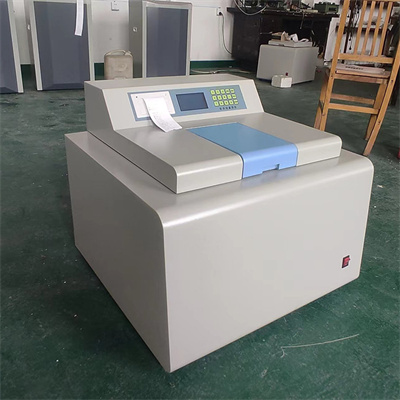
Calorimeter after debugging verification
After the debugging is completed, a verification test is required. Select a sample with a known calorific value, measure according to the above test steps, and compare the measurement results with the known calorific value. If the error is within the specified range, it means that the calorimeter has been successfully debugged and can be used normally; if the error is large, re-check the calibration and parameter setting links to find out the problem and solve it in time to ensure the accuracy of the calorimeter measurement results.
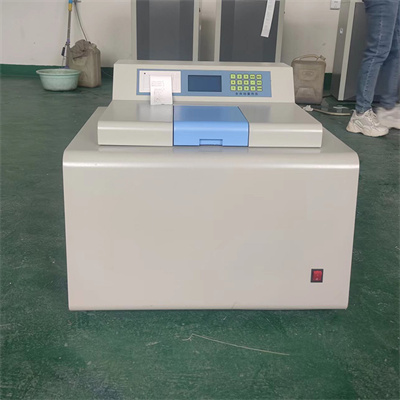 How to read calorimeter data
 What is the design principle of a calorimeter?
 What is the harm of lack of water in the calorimeter?
 What is the input interface of the calorimeter?