How to fill a calorimeter with water
First, preparations before water injection
Before launching the water injection of the calorimeter, it is necessary to make basic preparations. Confirm that the instrument is in a state of power failure and cooling to room temperature to avoid safety hazards caused by equipment operation or high temperature during water injection. At the same time, prepare distilled water or deionized water, which has high purity of water quality and can prevent impurities from clogging the instrument pipeline and affecting the measurement accuracy. In addition, prepare suitable water injection tools, such as special funnels or water injection pipes with scales, to facilitate accurate control of water injection.
Second, accurate water injection operation steps
1. Position the water injection port: carefully observe the appearance of the calorimeter and find a clearly marked water injection port. Most of the water injection ports are located on the side or top of the instrument and are equipped with a dust cover. Remove the dust cover first to clean up the dust and debris around the water injection port to prevent foreign objects from entering the instrument.
2. Control the water injection speed and amount: align the water injection tool with the water injection port, slowly and uniformly fill the water, to avoid the liquid overflowing or generating bubbles due to excessive water flow, which will interfere with the accuracy of subsequent measurement data. The water injection amount needs to strictly refer to the standard scale in the instrument manual. Usually there is a water level observation window or scale mark inside the instrument. Just fill the water to the middle of the scale line. Excessive or insufficient water will affect the measurement effect of the calorimeter.
3. Check the water injection status: After the water injection is completed, let it stand for 1-2 minutes to observe whether the water level is stable, and check whether there is any leakage at the water injection port and pipeline connection. If any leakage is found, the follow-up operation should be stopped in time to investigate the cause of leakage and deal with it.
Third, the conclusion and precautions after water injection
After the water injection is completed, cover the dust cover of the water injection port to prevent dust and impurities from entering. Then turn on the power supply of the instrument, and carry out the boot preheating and calibration operations according to the requirements of the manual to ensure that the calorimeter after water injection is in normal working condition. In addition, it is necessary to pay attention to avoid touching the precision parts of the instrument, such as sensors, heating devices, etc. during the water injection process to prevent damage to the instrument; if the instrument is idle for a long time, it is necessary to re-check the water level and replenish the water injection before re-use to ensure that the instrument can be put into use at any time.
 How to read calorimeter data
 What is the design principle of a calorimeter?
 What is the harm of lack of water in the calorimeter?
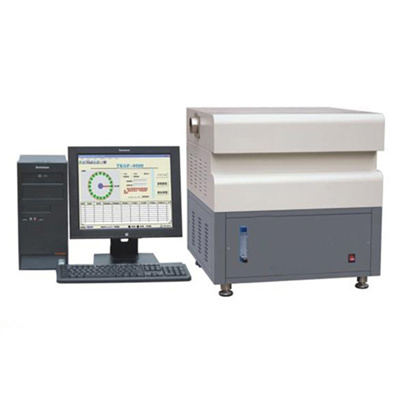 What is the input interface of the calorimeter?