How long does it take for the calorimeter to warm up?
Before using a calorimeter to carry out an experiment, the preheating process is crucial, which directly affects the accuracy of the experimental data and the stability of the instrument operation. So, how long does the calorimeter take to preheat? This is not a fixed value and needs to be determined by considering various factors.
Basic Range of Preheating Time of Conventional Calorimeter
Generally speaking, if the common calorimeters on the market are in a normal temperature environment, and the performance of the instrument is stable and trouble-free, the preheating time is usually 30 minutes to 60 minutes. At this stage, the core components such as heating components and temperature sensors inside the instrument will gradually reach a stable working state, establishing a solid foundation for subsequent accurate measurement. For example, some basic constant temperature calorimeters can be put into normal use after about 40 minutes of preheating after starting up, and the temperature of each component stabilizes.
Key factors affecting the warm-up time
1. Instrument model and configuration: Different models and configurations of calorimeters have obvious differences in preheating time. High-end, precision calorimeters may extend the preheating time to 90 minutes or even longer due to their complex internal structure and extremely high requirements for temperature control accuracy. This type of instrument is equipped with an advanced temperature control system, which takes longer to achieve the best matching state for each link of the system, ensuring that the measurement error is controlled within a very small range.
2. Ambient temperature conditions: The ambient temperature has a significant impact on the preheating time. In cold winter, when the ambient temperature is low, the time required for the instrument to warm up from a low temperature state to a stable operating temperature will increase significantly, which may be 20% - 50% more than in a normal temperature environment. On the contrary, in hot summer, when the ambient temperature is higher, the preheating time of the instrument may be shortened accordingly, but the potential impact of high temperature on the electronic components of the instrument cannot be ignored. It is necessary to ensure that the instrument is preheated within a suitable temperature range.
3. Frequency and state of use of the instrument: If the calorimeter is idle for a long time, when it is turned on again, due to the fact that the internal parts of the instrument may have a certain degree of aging, moisture, etc., the preheating time needs to be appropriately extended, generally 15-30 minutes more than daily use, in order to ensure that the various components of the instrument are fully activated and restore good working performance. For frequently used instruments, if the daily maintenance is in place, the preheating time is relatively stable and can be performed according to the usual duration.
Scientific judgment on the method of preheating completion
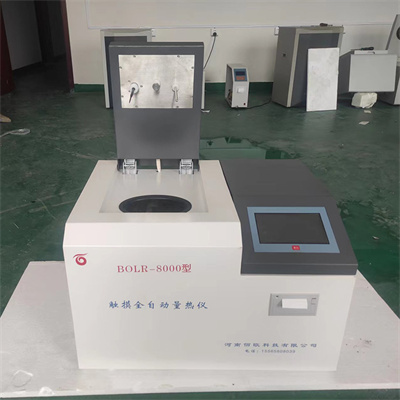
It is not possible to judge whether the preheating of the calorimeter is completed by time alone, but also by the state of the instrument. When the temperature display of the instrument display screen is stable, the fluctuation range is controlled within the error range specified in the instrument manual, and the functions are self-tested normally without an alarm prompt, it can be regarded as the preheating is completed. For example, when the temperature display of the calorimeter is stable within the set value of ± 0.1 ° C for a long time, it indicates that the instrument has reached a stable working state, and the experiment can be officially carried out.
Mastering the preheating time and judgment method of the calorimeter is the key to ensure the accurate and efficient development of the experiment. In actual operation, be sure to adjust the preheating time flexibly according to the characteristics of the instrument and environmental conditions to build a solid foundation for each experiment.
 How to read calorimeter data
 What is the design principle of a calorimeter?
 What is the harm of lack of water in the calorimeter?
 What is the input interface of the calorimeter?