What is the room temperature requirement for the calorimeter?
In various experimental detection scenarios, calorimeters play a key role, and they have strict requirements for room temperature. Room temperature control is directly related to the accuracy of the detection results.
Conventional room temperature requirements for calorimeters
Generally speaking, the ideal room temperature range for a calorimeter to work is 15 ° C - 30 ° C. In this range, the temperature sensors and circuit components inside the instrument can operate stably to avoid performance deviations due to temperature fluctuations. If the room temperature is lower than 15 ° C, the electronic components inside the instrument may have problems such as slow start and reduced sensitivity. If the room temperature is higher than 30 ° C, the heat dissipation burden of the instrument will increase, which will not only easily cause the components to overheat, but also may lead to large errors in the measurement data.
Strict limits on room temperature fluctuations
In addition to the temperature range, the calorimeter also has strict requirements on the fluctuation range of room temperature, and the fluctuation of room temperature needs to be controlled within ± 0.5 ° C/h. Because the calorimeter is extremely sensitive to temperature changes during heat measurement, even slight fluctuations in room temperature may interfere with the accurate calculation of heat transfer, resulting in distorted detection results. For example, when measuring the combustion heat of a substance, rapid fluctuations in room temperature will affect the heat dissipation balance of the instrument, which in turn affects the accurate determination of heat.
Practical measures to ensure room temperature compliance
In order to meet the room temperature requirements of the calorimeter, the laboratory needs to be equipped with constant temperature equipment, such as air conditioners, constant temperature control systems, etc., to monitor and adjust the room temperature in real time. At the same time, the laboratory should avoid direct sunlight and stay away from heat sources to reduce the interference of external factors on the room temperature. In addition, before the instrument is used, the constant temperature equipment should be turned on in advance, and the calorimeter should be started after the room temperature is stable to ensure that the instrument can carry out testing work in a stable temperature environment.
In short, accurately controlling the room temperature requirements of the calorimeter is the key to ensuring the accuracy and reliability of its test results. Only by strictly following the room temperature standard can the calorimeter maximize its effectiveness in experimental testing.
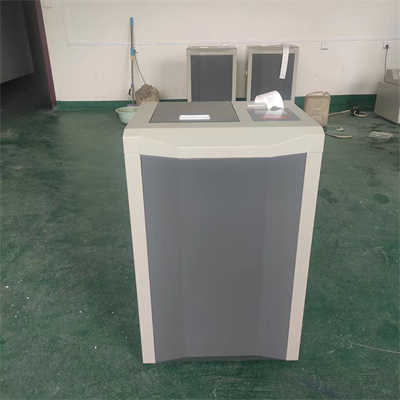
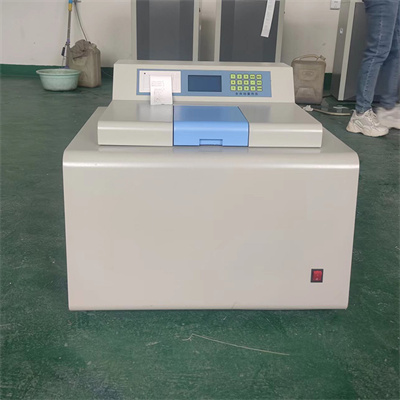 How to read calorimeter data
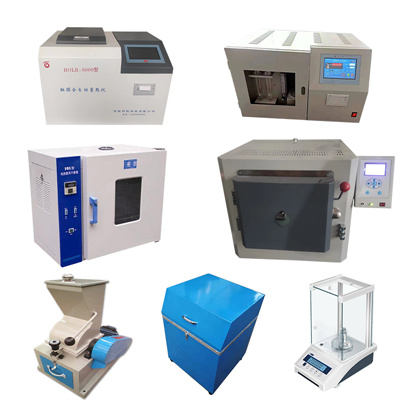 What is the design principle of a calorimeter?
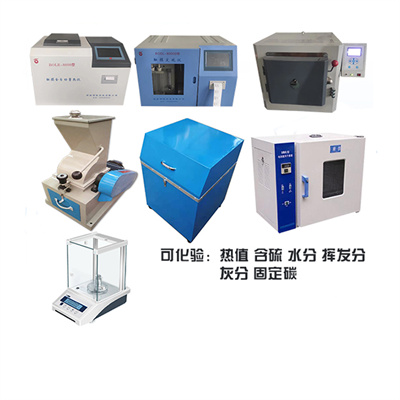 What is the harm of lack of water in the calorimeter?
 What is the input interface of the calorimeter?