What is the principle of the calorimeter?
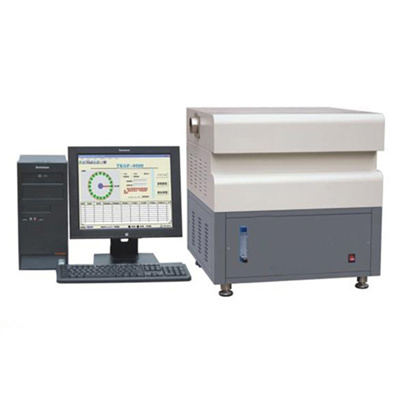
calorimeter, as a key instrument for accurately measuring heat, plays a pivotal role in many scientific research and industrial fields. Its core principle revolves around the accurate capture and quantification of heat, which is analyzed in detail below.
Foundation of Conservation of Heat
The operation of a calorimeter is based on the law of conservation of heat. When a substance undergoes a chemical reaction or physical change, it will be accompanied by the absorption or release of heat. The calorimeter builds a relatively closed environment to ensure that the heat generated by the reaction is either absorbed by the medium inside the instrument or released by the medium, so as to achieve accurate measurement of heat.
Temperature change tracking
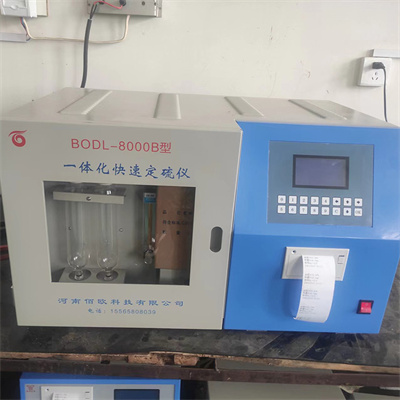
The calorimeter uses a high-precision temperature sensor to track temperature changes during the reaction process in real time. When a substance reacts, the system temperature fluctuates accordingly, and the temperature sensor converts these subtle changes into electrical signals and transmits them to the data processing system. Take the common elastic calorimeter as an example. The sample burns in an oxygen-filled cartridge, and the heat released increases the temperature of the water in the calorimeter. The temperature sensor accurately records the change of water temperature.
Heat calculation logic
According to the temperature change data, combined with the heat capacity parameters of the instrument, the heat of the reaction can be calculated. The heat capacity is the change in temperature when the instrument absorbs or releases unit heat, which is the key calibration parameter of the calorimeter. The heat released or absorbed by the reaction can be accurately calculated by using the formula Q = C × Delta T (Q is the heat, C is the heat capacity, and Delta T is the temperature change).
Precise control guarantee
In order to ensure accurate measurement, the calorimeter is designed to pay attention to environmental control. It uses thermal insulation materials to reduce external heat exchange, and is equipped with a constant temperature system to maintain initial temperature stability. In sample processing, the sample volume and uniformity are strictly controlled to avoid sample differences affecting the measurement results.
Understanding the principle of a calorimeter can not only assist in the accurate advancement of scientific research experiments, but also provide a key basis for heat control and process optimization in industrial production, making heat measurement no longer mysterious and injecting precise impetus into the development of various fields.
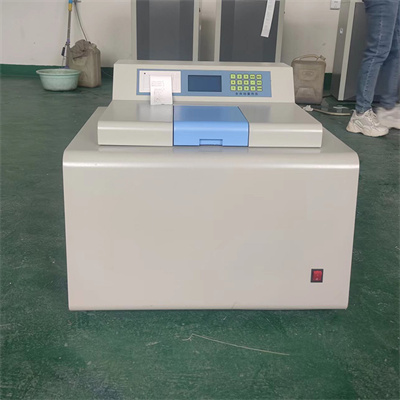 How to read calorimeter data
 What is the design principle of a calorimeter?
 What is the harm of lack of water in the calorimeter?
 What is the input interface of the calorimeter?