How to Choose a Calorimeter
Clarify your own needs
Before purchasing a calorimeter, the first task is to clarify your own usage requirements. If it is used for conventional coal, oil and other solid or liquid fuel calorific value determination, you need to pay attention to the measurement range and accuracy of the calorimeter. For example, for the coal industry, the measurement accuracy should meet the relevant national standards to ensure accurate and reliable data. If it is used in scientific research experiments, the sensitivity and stability of the instrument are higher, and more fine temperature control and data collection functions may be required.
Examine core performance metrics
Accuracy and Resolution: Accuracy is a key indicator of a calorimeter and directly affects the accuracy of measurement results. A high-precision calorimeter can reduce errors and provide reliable data for experiments and production. Resolution reflects the instrument's ability to detect small changes, and high resolution helps capture subtle heat changes.
Stability: A stable calorimeter can maintain consistent performance over a long period of time. Its stability can be judged by looking at the repeatability index of the instrument. A calorimeter with good repeatability has small deviations in multiple measurement results, which can ensure the consistency of the experiment.
Heating and temperature control ability: A calorimeter with fast heating speed and accurate temperature control can improve the experimental efficiency. An excellent temperature control system can ensure that the experiment is carried out in a constant temperature environment and avoid the influence of temperature fluctuations on the measurement results.
Focus on instrument configuration and function
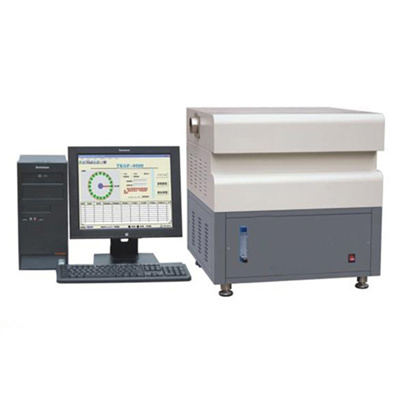
Automation: A calorimeter with a high degree of automation is easy to operate and can reduce human errors. Instruments with functions such as automatic water addition, automatic mixing, automatic ignition, automatic calculation and printing results not only improve work efficiency, but also reduce the difficulty of operation, suitable for users of different operating levels.
Data storage and transmission: A calorimeter with large-capacity data storage function is convenient for recording and querying historical measurement data. At the same time, instruments that support data transmission function can easily import data into the computer for further analysis and processing, meeting the data management needs of modern laboratories.
Consider brand and after-sales
Choose a well-known brand of calorimeter, product quality and performance are more guaranteed. Well-known brands usually have a complete R & D and production system, strict quality control process, can provide more reliable products. In addition, good after-sales services are also crucial. Including the installation and commissioning of the instrument, training guidance, repair and maintenance and technical support. Timely and professional after-sales can solve the problems encountered during use and ensure the normal operation of the instrument.
Compare price and cost performance
On the premise of meeting demand and performance requirements, compare the prices of different brands and models of calorimeters. You can't simply pursue low prices and ignore product quality and performance. Take into account factors such as instrument performance, configuration, brand and after-sales services, and choose cost-effective products to maximize investment benefits.
Overall, the purchase of a calorimeter requires a comprehensive review of various factors, starting from one's own needs, and a comprehensive review of the instrument's performance, configuration, brand, and price, in order to select the most suitable calorimeter and provide strong support for experimentation and production.
 How to read calorimeter data
 What is the design principle of a calorimeter?
 What is the harm of lack of water in the calorimeter?
 What is the input interface of the calorimeter?