Can a calorimeter measure a quantitative heat curve?
The core function and measurement foundation of calorimeter
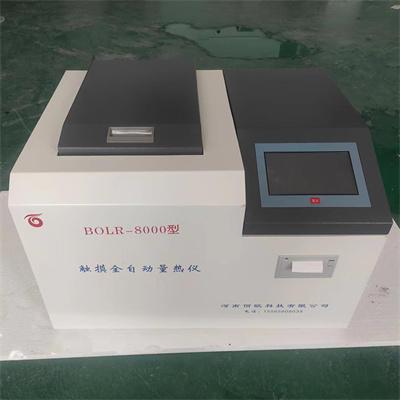
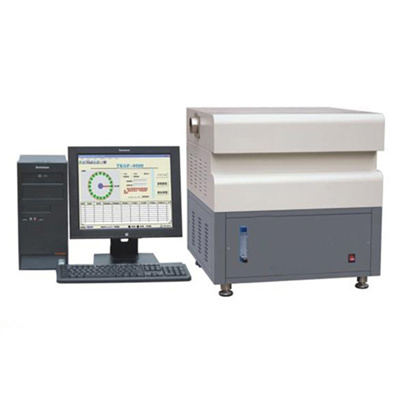
A calorimeter is a precision instrument specially used to measure the heat change of a substance during physical or chemical changes. Its core function is to accurately capture the heat release or absorption during the reaction process. From the principle point of view, it is based on the basic laws of thermodynamics, and through the built-in high-precision temperature sensor, heat insulation system and data recording module, it monitors the temperature change of the reaction system in real time, and then deduces the heat change data. The calorimeter curve is essentially a curve that reflects the change of heat over time or the reaction process. As long as the calorimeter can accurately record the temperature-time correlation data, it has the basic conditions for measuring the quantitative heat curve.
Realization Logic of Quantitative Heat Curve Measured by Calorimeter
The core of measuring the quantitative heat curve with a calorimeter lies in the continuous monitoring and data transformation of the reaction process. When the sample to be tested reacts, the instrument will collect the temperature data of the system at a fixed frequency, and combine the parameters such as sample quality and specific heat capacity to convert the temperature change into the heat change value through the built-in algorithm. After these continuous heat data points are sorted and fitted by the software system, an intuitive calorimetric curve can be generated, which clearly shows the heat change law of key nodes such as the beginning, peak, and end of the reaction. Whether it is an exothermic reaction or an endothermic reaction, it can be accurately presented through the curve.
Key factors affecting the accuracy of measurement
To ensure the accuracy of the quantitative heat curve measured by the calorimeter, a number of key factors need to be controlled. First, the calibration of the instrument requires regular calibration of the temperature sensor and heat compensation system to eliminate system errors; second, sample processing, the purity, dosage, and uniformity of the sample will directly affect the stability of the reaction, and it needs to be operated strictly according to the specifications; third, environmental control, external temperature fluctuations and airflow disturbances will interfere with temperature monitoring, and experiments need to be carried out in a constant temperature and non-disturbing environment; fourth, parameter setting, and parameters such as sampling frequency and range need to be reasonably set according to the type of reaction to ensure complete data capture.
Practical application scenarios of calorimetric curve measurement
The calorimetry curve measured by the calorimeter has important application value in many fields. In chemical research and development, the thermal effect of the reaction can be analyzed by the curve, the reaction conditions can be optimized, and the production efficiency can be improved; in the field of materials science, the thermal stability and phase change process of materials can be studied by the curve, which provides data support for the research and development of new materials; in the energy field, the combustion heat of fuel can be measured and the energy utilization efficiency can be evaluated; in the food industry, the thermal change of food ingredients can be analyzed by the curve, and the processing process can be optimized. Mastering the curve measurement method of the calorimeter can provide reliable technical support for the thermal analysis experiments of various industries.
 How to read calorimeter data
 What is the design principle of a calorimeter?
 What is the harm of lack of water in the calorimeter?
 What is the input interface of the calorimeter?