Is a calorimeter an industrial analyzer?
In the field of industrial production and scientific research testing, the division of labor of various analytical instruments is becoming increasingly refined, and many practitioners often question whether "calorimeters belong to industrial analyzers". To clarify this issue, it is necessary to start from the core definition, functional positioning and application scenarios of the two, and clarify their essential differences and relationships.
Core definition: clarify the essential properties of both
Industrial analyzers are a type of instrument used in industrial production processes to comprehensively detect the composition, content, and physical and chemical properties of raw materials, intermediate products, and finished products. They cover multiple functions such as elemental analysis, component quantification, and performance testing. The core goal is to provide data support for the quality control and process optimization of industrial production. The core function of a calorimeter is to accurately measure the heat released or absorbed by substances during chemical reactions and physical changes, focusing on the quantitative detection of the specific physical parameter of "heat". It is a special instrument for heat measurement.
Function positioning: focus on different detection dimensions
From a functional point of view, the detection range of industrial analyzers is broader, covering multi-dimensional indicators such as element composition, impurity content, and physical properties, and is a "comprehensive quality inspector" for the whole process of industrial production. For example, in the coal industry, industrial analyzers can simultaneously detect key indicators such as moisture, ash, and volatile matter of coal, and comprehensively evaluate coal quality.
The function of the calorimeter is highly focused, focusing only on heat measurement. By accurately capturing data such as reaction heat and combustion heat, it provides a core basis for energy accounting and process safety assessment in industrial production. For example, in chemical production, the calorimeter can measure the exothermic rate of chemical reactions, help enterprises optimize reaction conditions and avoid safety accidents.
Application scenarios: Matching different industrial requirements
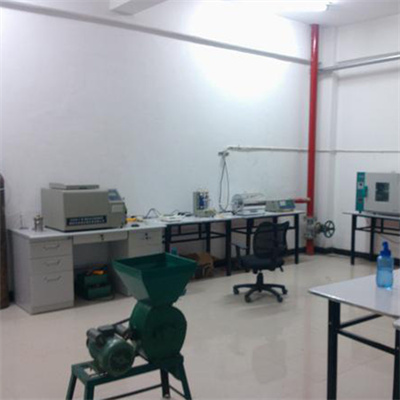
Industrial analyzers are widely used in coal, chemical industry, building materials, metallurgy and many other industrial fields. They run through the whole process of raw material inspection, production process monitoring, and finished product inspection. They are key equipment to ensure the standardization and compliance of industrial production. The application scenarios of calorimeters are more focused on areas with strict requirements for heat parameters, such as thermal stability testing in the research and development of new energy batteries, heat value measurement in the food industry, and waste combustion heat detection in the field of environmental protection. They are the core tools for energy-related testing.
Correlation and conclusion: subordination rather than equivalence
From the classification and attribution point of view, the calorimeter can be regarded as a special equipment in the subdivision field of the industrial analyzer system, but it must not be equivalent to the generalized industrial analyzer. Industrial analyzer is a comprehensive instrument category covering multi-dimensional detection, and calorimeter is a special project instrument focusing on heat measurement. There are clear differences in function and application scope between the two.
In summary, the calorimeter is not a comprehensive industrial analyzer in the traditional sense, but a special instrument for heat measurement in the industrial testing system. The two are both functionally related and have a clear division of labor. When selecting a model, companies need to accurately match the type of instrument according to their own testing needs in order to efficiently support production and scientific research.
 How to read calorimeter data
 What is the design principle of a calorimeter?
 What is the harm of lack of water in the calorimeter?
 What is the input interface of the calorimeter?