The reason for the calibration failure of the calorimeter
In the coal, chemical and other industries, calorimeters are the core instruments for accurately measuring the calorific value of substances, and the calibration process is directly related to the accuracy of the test results. Once the calibration fails, it not only affects the experimental progress, but also may lead to data bias. The following are the common reasons for the calibration failure of calorimeters from multiple dimensions to help quickly locate the problem.
Environmental conditions are not up to standard
Calorimeters have strict environmental requirements, and fluctuations in temperature and humidity are an important cause of calibration failure. If the temperature in the laboratory is unstable, and the temperature difference exceeds ± 1 ° C, it will interfere with the thermal balance state of the instrument and cause the calibration result to be distorted. In terms of humidity, when the ambient humidity is higher than 80%, the internal components of the instrument are prone to moisture, which affects the stability of the circuit, and then causes abnormal calibration data. In addition, if there is a strong airflow or vibration source in the laboratory, it will also destroy the precise balance of the instrument, resulting in calibration failure.
Reference materials and reagents
The quality of the reference material is the core prerequisite for the successful calibration. If the selected benzoic acid is not pure enough, damp or stored for too long, its heat generation will deviate, which will directly lead to the calibration result deviating from the standard value. At the same time, the material, thickness and installation method of the ignition wire are also crucial. Oxidation of the ignition wire, too loose or too tight installation of the ignition wire will cause ignition failure or incomplete combustion, resulting in invalid calibration data. In addition, the purity of the inner cylinder water is not up to standard, containing impurities or bubbles, which will affect the heat transfer efficiency and lead to inaccurate calibration results.
The instrument itself malfunctions
Aging or damage to instrument components is a common source of calibration failure. Decreased sealing performance of oxygen bombs and air leakage will lead to insufficient combustion reaction and inability to release standard heat, and the calibration results will inevitably be distorted. Abnormal or stuck rotational speed of the agitator will cause uneven distribution of water temperature in the inner cylinder, and the temperature sensor cannot accurately capture temperature changes, resulting in calibration data fluctuations. In addition, aging and calibration failure of the temperature sensor will directly cause temperature measurement errors, which will make the calibration results unreliable.
The operation process is not standardized.
Non-standard operation is the human factor of calibration failure. Inaccurate weighing of the sample, too much or too little will affect the determination of calorific value; uneven filling of the sample, resulting in incomplete combustion; not strictly following the instrument instructions during the calibration process, such as not preheating the instrument in advance, not waiting for the instrument to stabilize before calibration, will affect the calibration results. In addition, it is difficult to detect omissions in the calibration process in time if the data is not recorded and verified in time after the calibration is completed.
Investigation and solution ideas
In the face of calibration failure, the following steps can be followed for investigation: first check whether the ambient temperature and humidity meet the requirements and eliminate environmental interference; then confirm the validity of the standard material and reagent, and replace the qualified benzoic acid, ignition wire and inner cylinder water; then conduct a comprehensive inspection of the instrument, focusing on testing the tightness of the oxygen bomb, agitator and temperature sensor, and timely repair or replacement of the faulty parts; finally, strictly standardize the operation process to ensure that each step meets the instrument standards.
Only by grasping the reasons for the calibration failure of the calorimeter and doing a good job in daily investigation and maintenance can we ensure the detection accuracy of the calorimeter and provide reliable data support for experiments and production.
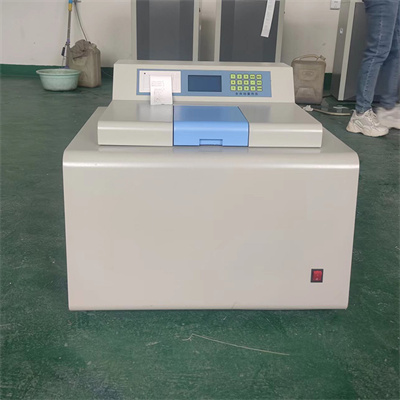 How to read calorimeter data
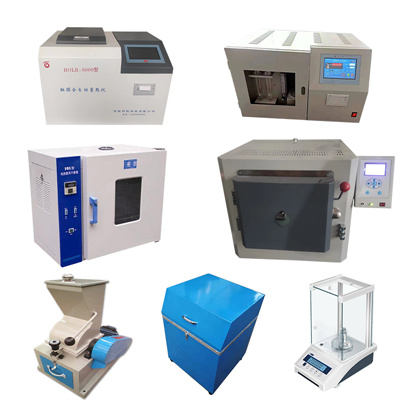 What is the design principle of a calorimeter?
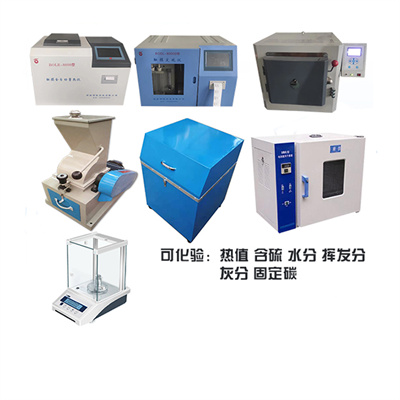 What is the harm of lack of water in the calorimeter?
 What is the input interface of the calorimeter?