What are the assimilation calorimeters?
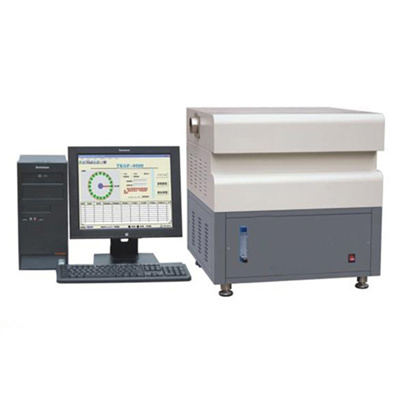
The assimilation calorimeter, as a key device for accurately measuring the heat change during the assimilation process of substances, plays an important role in many fields such as scientific research and industrial production. Below, we will introduce the common types of assimilation calorimeters in detail.
Classification according to measurement principle
Constant temperature assimilation calorimeter: This type of instrument precisely captures the heat released or absorbed during the assimilation of substances by maintaining a constant temperature environment. It has the advantages of strong stability and high measurement accuracy, and is especially suitable for experimental scenarios that require strict temperature fluctuations, such as heat measurement in biological metabolism research. Constant temperature assimilation calorimeters can output reliable data stably, helping researchers to deeply analyze metabolic laws.
Adiabatic assimilation calorimeter: The core of its design is to isolate the external heat exchange, so that the material assimilation process can be carried out under almost adiabatic conditions. In this way, the interference of environmental factors on the measurement results can be minimized to ensure the purity of the data. In the accurate determination of chemical reaction heat, the adiabatic assimilation calorimeter has obvious advantages and provides solid data support for process optimization.
Classification by application scenario
Research-type assimilation calorimeter: Tailored for cutting-edge scientific research, with ultra-high sensitivity and resolution, it can capture extremely weak heat changes. In the field of life sciences, researchers use it to study the assimilation of cells and explore the mysteries of life activities; in the field of materials science, it helps analyze the heat changes during the synthesis of new materials, providing a key basis for material performance optimization.
Industrial assimilation calorimeter: Focusing on the actual needs of industrial production, it has strong durability and stability, and can adapt to complex and harsh industrial environments. In the food processing industry, industrial assimilation calorimeters are used to monitor heat changes during food fermentation and baking to ensure stable product quality; in the field of energy and chemical industry, it controls the heat dynamics during the reaction process in real time, helping enterprises achieve efficient and safe production.
Classify by degree of automation
Manual operation of the assimilation calorimeter: The operation process relies on manual intervention. Although the operation is relatively cumbersome, the cost is low, and it is suitable for small laboratories with limited budgets and low requirements for measurement frequency. The operator manually completes the steps of sample addition and data recording with experience and professional skills to meet the basic heat measurement needs.
Automatic assimilation calorimeter: Integrated with advanced automation technology, it can realize automatic sample injection, automatic data collection and analysis, greatly improving measurement efficiency and accuracy. In large-scale sample detection scenarios, the automatic assimilation calorimeter has outstanding advantages, which can quickly and accurately complete a large number of detection tasks, save labor costs and improve work efficiency.
Different types of assimilation calorimeters have their own strengths and weaknesses. When selecting a model, users need to consider their own measurement needs, budget, and application scenarios in order to choose the most suitable equipment and build a solid foundation for scientific research and production.
 How to read calorimeter data
 What is the design principle of a calorimeter?
 What is the harm of lack of water in the calorimeter?
 What is the input interface of the calorimeter?