Several types of calorimeters
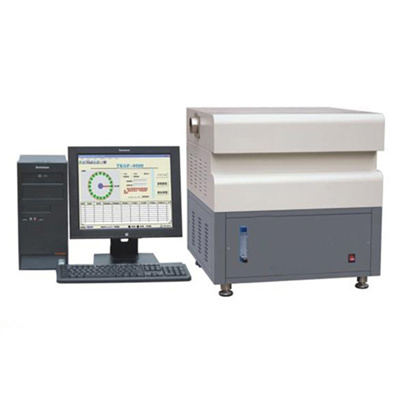
In the fields of coal quality detection, energy and chemical industry, calorimeters are the core equipment for accurately measuring the calorific value of substances. Different scenarios have different functional requirements for instruments, giving rise to a variety of types. The following is a detailed introduction to the characteristics and application scenarios of mainstream calorimeters.
Automatic calorimeter
The automatic calorimeter is one of the most widely used types, and its core advantage is high automation. The instrument can automatically complete the whole process of loading, ignition, temperature measurement, calculation and result printing, which greatly reduces manual intervention and operation errors. It is equipped with a high-precision temperature sensor, which can accurately capture temperature changes and is suitable for batch detection scenarios, such as the daily detection of coal calorific value of large coal enterprises. It is efficient and stable, and can meet the needs of high-intensity detection.
Microcomputer calorimeter
The microcomputer calorimeter takes the computer system as the core and realizes the intelligence of detection and data processing. It can not only automatically complete the detection process, but also store and analyze data through software to generate visual reports for subsequent traceability and management. This type of calorimeter supports data network transmission and adapts to the needs of laboratory information management. It is often used in scientific research institutions and university laboratories. It has significant advantages in complex sample detection and experimental data analytics, and can meet the needs of high-precision and multi-dimensional detection.
Third, constant temperature calorimeter
The constant temperature calorimeter adopts constant temperature control technology to maintain the stability of the detection environment temperature through the constant temperature water jacket, reducing the interference of the ambient temperature on the detection results. The instrument structure is relatively simple, the operation is convenient, and the maintenance cost is low. It is suitable for small and medium-sized detection scenarios that require moderate detection accuracy, such as small coal quality testing stations and building materials companies. With its stable performance and cost, it has become a common equipment for basic testing.
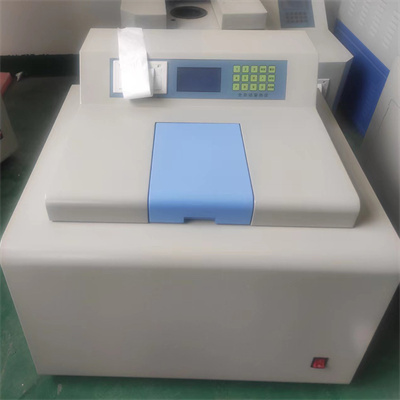
Fourth, adiabatic calorimeter
The adiabatic calorimeter uses a complete thermal insulation device to isolate the heat exchange between the instrument and the outside world, minimizing the impact of environmental factors, and has high detection accuracy. It is suitable for testing scenarios that require strict accuracy of results, such as arbitration testing by national authoritative testing institutions and quality testing of high-end energy products. It can provide authoritative protection for test results and is the core equipment for high-precision testing.
Different types of calorimeters have their own emphasis. When selecting, it is necessary to combine the detection requirements, scale and accuracy requirements in order to give full play to the value of the instrument and ensure the accuracy of the detection results.
 How to read calorimeter data
 What is the design principle of a calorimeter?
 What is the harm of lack of water in the calorimeter?
 What is the input interface of the calorimeter?