How to judge the quality of a calorimeter
In many industries such as energy, chemical, and food, calorimeters are key devices for measuring the calorific value of substances, and their performance directly affects the accuracy of the test results. So, how to accurately judge the quality of a calorimeter? The following is a detailed analysis from multiple key dimensions.
Accuracy is the core metric
Accuracy is the primary criterion for measuring the quality of a calorimeter. For a high-quality calorimeter, the test results should be highly consistent with the theoretical calorific value of the reference material. In actual operation, standard benzoic acid with known calorific value can be selected, and multiple tests are carried out in strict accordance with the instrument operation process. If the deviation of multiple test results is extremely small, the error is controlled within the reasonable range stipulated by the industry. If the error required by international standards does not exceed 0.2%, it means that the calorimeter has high accuracy and can meet the professional testing needs.
Stability determines long-term performance
In addition to accuracy, stability is also crucial. A good calorimeter should maintain stable performance during long-term continuous operation, and will not fluctuate greatly due to external factors such as ambient temperature and voltage fluctuations. The consistency of the results can be observed by continuously testing the same sample multiple times. If the fluctuation range of multiple test results is small, it indicates that the instrument is stable and can provide a reliable guarantee for long-term and large-scale testing work.
Ease of operation affects efficiency
The ease of operation is also an important factor in judging the quality of the calorimeter. An excellent calorimeter should have a simple and intuitive operation interface, a reasonable layout of the function buttons, and a simple training for the operator to get started quickly. At the same time, the instrument should have functions such as automatic calibration, automatic calculation, data storage and export, etc., to reduce manual operation errors and improve detection efficiency. If the operation process is cumbersome and complicated, it will not only increase the workload of the operator, but also easily lead to deviation of the test results due to improper operation.
After-sales services guarantee worry-free use
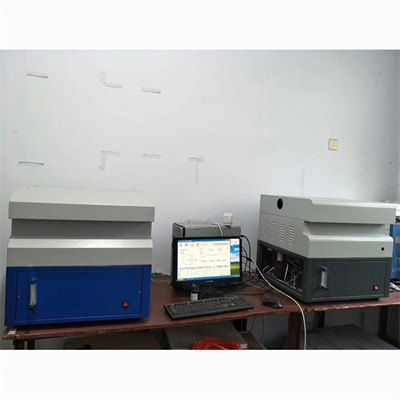
As a precision instrument, the calorimeter will inevitably malfunction during use. Therefore, perfect after-sales services are the invisible standard for judging the quality of the calorimeter. High-quality suppliers should provide timely technical support, can quickly respond to equipment failures, and arrange professional technicians to come to repair; at the same time, they should also provide sufficient supply of accessories to ensure that the instrument can resume normal use as soon as possible during maintenance. In addition, regular return visits and maintenance services can also help users detect potential problems in time and prolong the service life of the instrument.
In short, to judge the quality of a calorimeter, we need to consider various factors such as accuracy, stability, ease of operation, and after-sales services. Only through comprehensive evaluation can we choose a calorimeter with excellent performance and meet actual needs, providing strong support for production and scientific research.
 How to read calorimeter data
 What is the design principle of a calorimeter?
 What is the harm of lack of water in the calorimeter?
 What is the input interface of the calorimeter?