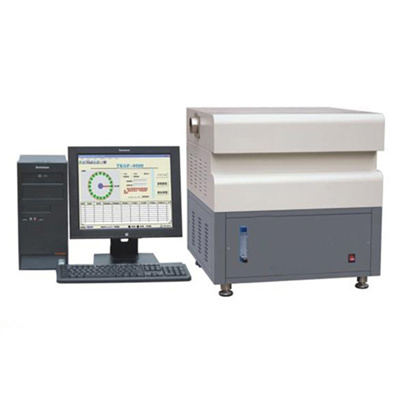
What are the complete sets of calorimeters?
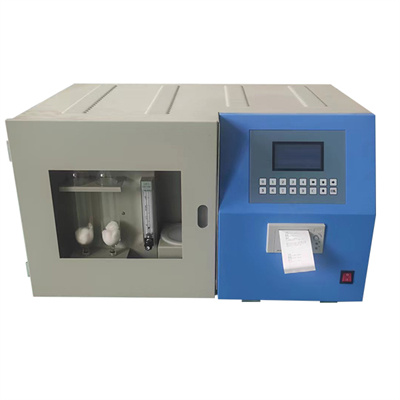
In the fields of energy, chemical industry, and scientific research, calorimeters play a key role, and the complete set of calorimeters has a rigorous and complete composition, which can help to carry out related work efficiently.
Core Component - Oxygen Bomb
The oxygen bomb is one of the core components of the whole calorimeter, which undertakes the key task of holding the sample and ensuring complete combustion. The oxygen bomb has high-strength pressure resistance and can withstand the huge pressure generated in the moment of combustion. It is equipped with electrodes inside, which ignite the sample through the ignition device. At the same time, the oxygen bomb has good sealing performance, which can prevent gas leakage during combustion and ensure the accuracy of measurement data.
Measuring body - calorimetric body
The calorimeter body is the core part of achieving accurate heat measurement. It usually contains an inner cylinder and an outer cylinder, which hold the sample and water to be tested, and the outer cylinder plays a role in heat preservation and heat insulation to reduce heat loss. The calorimeter body is equipped with a high-precision temperature sensor, which can capture temperature changes in real time. Combined with thermodynamic formulas, the heat released by the combustion of the sample is accurately calculated, providing reliable data support for subsequent analysis.
Auxiliary systems - ignition and mixing units
The ignition device is responsible for providing the initial energy for the sample to burn, ensuring that the sample ignites quickly and stably, and ensuring the integrity of the combustion process. The stirring device continues to stir the liquid in the inner cylinder to transfer heat evenly, avoid local temperature differences affecting the measurement accuracy, and allow the temperature sensor to accurately reflect the overall temperature change to ensure the consistency of the measurement results.
Data processing - control systems
The control system is the "brain" of the whole set of calorimeters, which integrates data collection, processing and display functions. By connecting components such as temperature sensors, the measurement data is collected in real time, and professional algorithms are used for calculation and analysis, and the results are finally presented intuitively on the display screen. Some advanced control systems also have data storage and export functions, which is convenient for subsequent inquiry and research.
Understanding the composition of a complete set of calorimeters allows you to better grasp its working principle and operation points. Whether it is equipment selection or daily use, the calorimeter can be used to maximize its effectiveness and lay a solid foundation for work in related fields.
 How to read calorimeter data
 What is the design principle of a calorimeter?
 What is the harm of lack of water in the calorimeter?
 What is the input interface of the calorimeter?