How to cool a microcomputer calorimeter
Basic operation of natural cooling
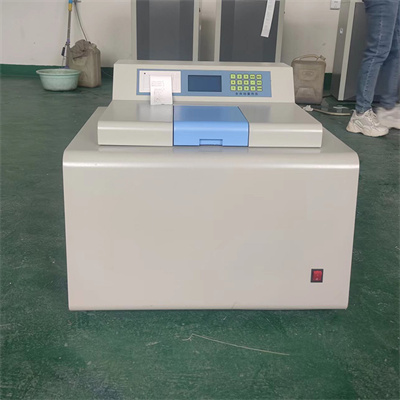
Microcomputer calorimeter cooling, natural cooling is the basic way. After completing the test, turn off the power of the instrument, open the heat dissipation hole of the instrument shell, and let the instrument stand for cooling at room temperature. Make sure that the instrument is placed in a well-ventilated and non-direct sunlight position to avoid high temperature environment affecting heat dissipation efficiency. Natural cooling is suitable for daily non-high-frequency use scenarios. It is simple to operate and does not require additional equipment, but the cooling down is relatively long. Please wait patiently for the temperature of the core components of the instrument to naturally drop.
An efficient method of forced cooling
When it is necessary to quickly cool the microcomputer calorimeter, forced cooling means can be used. With the help of the special cooling fan matched by the instrument, align it with the heat dissipation port of the instrument to open, accelerate the air flow and remove heat. Some high-end microcomputer calorimeters have their own intelligent forced cooling system, which can be started with one button. The system automatically adjusts the wind speed and cooling time, greatly improving the cooling efficiency. When operating, be sure to strictly follow the instrument instructions to avoid damage to the precision components inside the instrument due to excessive wind speed or improper operation.
Inspection and maintenance after cooling
After the cooling is completed, the follow-up inspection cannot be ignored. First touch the instrument shell to confirm that the temperature has dropped to the normal range, and then turn on the power supply to check whether the various parameters of the instrument are normal. At the same time, regularly clean the dust on the cooling hole and fan to prevent dust from accumulating and blocking the cooling channel, which affects the subsequent cooling effect. Doing a good job of maintenance after cooling can prolong the service life of the microcomputer calorimeter, ensure the accuracy of the follow-up test data, and lay a solid foundation for the experiment and detection work.
 How to read calorimeter data
 What is the design principle of a calorimeter?
 What is the harm of lack of water in the calorimeter?
 What is the input interface of the calorimeter?