How many parameters of the calorimeter are appropriate?
The reasonable setting of the parameters of the calorimeter is the core premise to ensure the accuracy of the experimental results. In different application scenarios, there are significant differences in parameter requirements. Only by grasping the key points can the equipment perform at its best.
Core parameter 1: Temperature control range. The temperature control of a conventional calorimeter needs to cover the range from room temperature to 300 ° C. If it is used for high burning value fuel detection, the upper limit can be extended to 500 ° C. The accuracy needs to be stable at ± 0.1 ° C. Too low accuracy will lead to deviation in heat calculation, which directly affects the accuracy of experimental data.
Core parameter 2: Heat capacity stability. The fluctuation of heat capacity of a high-quality calorimeter should be controlled within 0.1%, which directly determines the ability of the instrument to capture heat. If the stability of heat capacity is insufficient, the results of multiple experiments will fluctuate significantly, which cannot meet the needs of repetitive experiments.
Core parameter 3: heating rate. In conventional testing, the heating rate is set at 1-5 ° C/min. Too fast will lead to insufficient sample combustion, and too slow will lengthen the test schedule. For special sample testing, it can be fine-tuned according to the characteristics of the sample, but it is necessary to ensure that the heating process is uniform and controllable.
Core parameter 4: Measurement resolution. The resolution needs to reach more than 1J/g. High resolution can accurately capture small heat changes, especially for low calorific value sample detection. When the resolution is insufficient, it is easy to miss key data, resulting in distorted experimental conclusions.
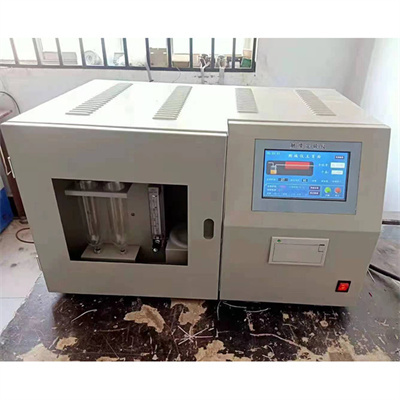
The key basis for parameter adaptation. When selecting parameters, comprehensive judgment is required based on sample type, testing standards and experimental accuracy requirements. Chemical fuel testing needs to focus on high temperature range and high stability, while food, building materials and other low calorific value samples need to prioritize resolution and temperature control accuracy.
Setting the parameters of the calorimeter reasonably can not only improve the experimental efficiency, but also ensure the reliability of the data. It is recommended to refer to the national standards and equipment manuals, and calibrate the parameters according to the actual testing needs, so that the calorimeter can become a powerful tool for accurate testing.
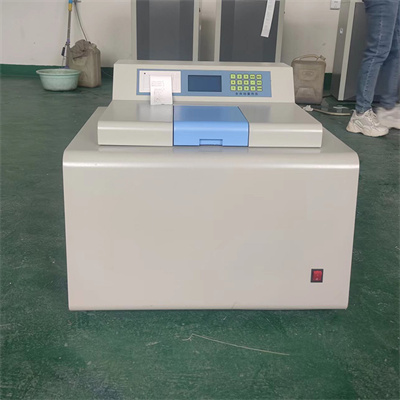 How to read calorimeter data
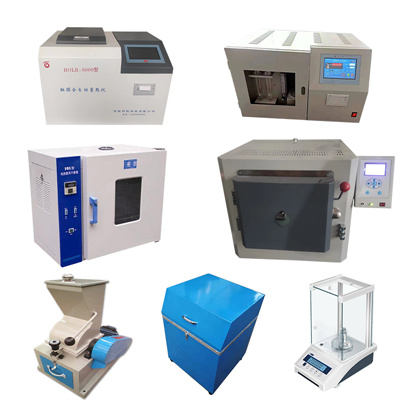 What is the design principle of a calorimeter?
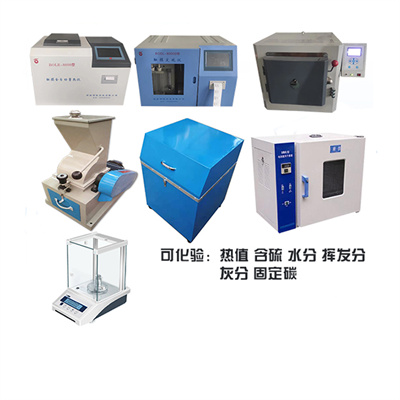 What is the harm of lack of water in the calorimeter?
 What is the input interface of the calorimeter?