Which brand of calorimeter is the best?
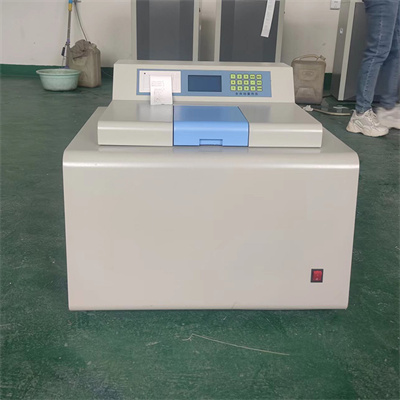
In fields such as scientific research and energy detection, calorimeters are key devices for accurately measuring heat, and choosing the right brand is directly related to detection efficiency and data accuracy. So, which brand of calorimeter is the best? Here is a detailed breakdown of mainstream brands for you to help you make quick decisions.
Analysis of core brand advantages
Germany IKA: As an industry veteran, the IKA calorimeter is famous for its high-precision temperature control and stable repeatability. It uses advanced thermal insulation technology to minimize environmental interference, especially for scientific research scenarios with extremely low data error tolerance. It can output reliable data even in the face of complex samples, making it the best choice for high-end laboratories.
US TA Instruments: Relying on its strong R & D strength, TA calorimeters have outstanding performance in automation and software adaptation. The equipment can automatically complete processes such as sample loading and data calibration, and with intelligent analysis software, it can quickly generate multi-dimensional thermal analysis reports, greatly reduce labor costs, and efficiently adapt to batch detection requirements.
Domestic sea energy instruments: The main cost-effective advantage, while meeting the domestic basic testing standards, the price is only 60% -70% of the imported brand. According to the actual needs of the domestic energy and chemical industries, the durability and operation convenience of the equipment are optimized, and localized after-sales is also provided, and the maintenance response is fast. It is a practical choice for small and medium-sized enterprises and grassroots testing institutions.
Malvern Panaco, UK: Focusing on high-end customization, we can customize exclusive calorimetric modules according to the specific detection needs of users. Whether it is special form samples or detection under extreme temperature conditions, we can provide accurate solutions, adapt to special scientific research and industrial scenarios, and provide support for personalized detection needs.
Purchase key metrics
1. Accuracy level: Models with an accuracy of less than or equal to 0.1% are preferred, and high-end models with an accuracy of less than or equal to 0.05% are required for core experimental scenarios to ensure reliable data.
2. Adaptation scenario: choose imported high-end models for scientific research, choose highly automated models for batch testing, and choose domestic cost-effective models for basic testing, and match on demand.
3. After-sales guarantee: Pay attention to the brand localization service ability, and give priority to brands that provide 24-hour response and quality assurance for more than 1 year to avoid equipment failure affecting the progress.
Overall, calorimeter brands have their own priorities, and by combining their own budgets, testing needs, and scenarios, they can choose the most suitable products to ensure the smooth development of testing work.
.jpg)
 How to read calorimeter data
 What is the design principle of a calorimeter?
 What is the harm of lack of water in the calorimeter?
 What is the input interface of the calorimeter?