Which brand of calorimeter is good?
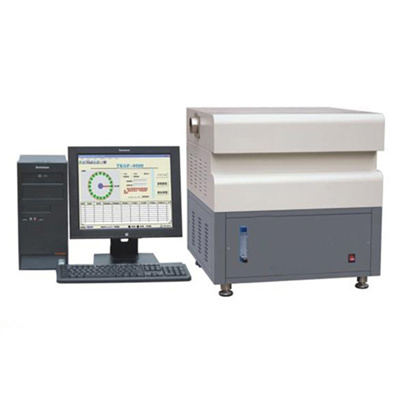
In the fields of scientific research, energy, chemical industry, etc., calorimeters are the core equipment for accurately measuring the heat of substances. Choosing the right brand directly affects the accuracy and work efficiency of experimental data. So, which brand of calorimeter is good? Below, from the core performance and applicable scenarios, we will sort out the purchase logic of high-quality brands for you.
First, domestic high-quality brands: cost-effective and practical
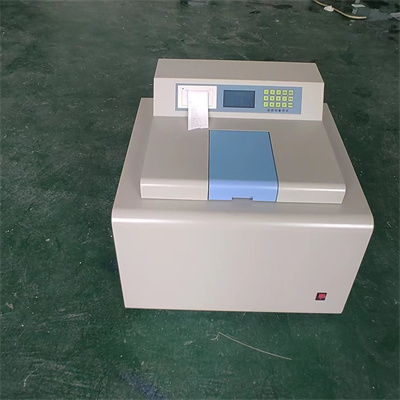
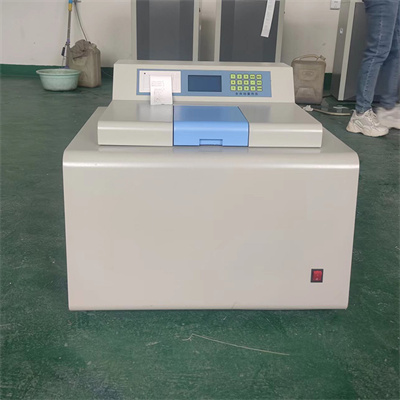
Domestic brands have become the best choice for most laboratories by virtue of their advantages in meeting local needs. Changsha Kaiyuan Instrument is an established enterprise in the industry. Its calorimeter is equipped with a high-precision sensor with a temperature control accuracy of ± 0.1 ° C. With an intelligent calibration system, it can quickly adapt to the detection of solid fuels such as coal and biomass, and the after-sales response is timely. It is suitable for small and medium-sized laboratories with limited budgets and emphasis on daily batch testing.
Second, imported professional brands: outstanding high precision and stability
If the experiment requires strict accuracy and stability, imported brands will have an advantage. Germany's IKA calorimeter adopts a modular design with excellent heat capacity stability. With a fully automatic sampling system, it can achieve continuous unattended detection and adapt to complex scientific research scenarios. The US TA instrument is leading in dynamic calorimetry technology, which can accurately capture weak heat changes. It is suitable for high-end scientific research needs such as material research and development and drug thermal analysis, but the price is relatively high, making it more suitable for professional laboratories with sufficient budgets.
III. Purchase core considerations
1. Accuracy indicators: Priority should be given to heat capacity stability and temperature control accuracy. Products with an accuracy of less than ± 0.2 ° C should be selected for routine testing, and the scientific research level should be below ± 0.1 ° C.
2. Applicable scenarios: Coal testing focuses on pollution resistance and batch processing capabilities, while scientific research scenarios require both dynamic calorimetry and data expansion.
3. After-sales guarantee: Priority is given to brands that provide free calibration and on-site maintenance to avoid equipment failures affecting the progress of the experiment.
In summary, small and medium-sized laboratories can choose Changsha Kaiyuan based on cost-effectiveness, and IKA or TA instruments are preferred for high-end scientific research needs. Only by matching the brand according to their own scenarios can they choose a truly easy-to-use calorimeter.
 How to read calorimeter data
 What is the design principle of a calorimeter?
 What is the harm of lack of water in the calorimeter?
 What is the input interface of the calorimeter?