How does a calorimeter correct temperature?
The Importance of calorimeter Temperature Correction
Calorimeters play a key role in various calorific value measurement scenarios, and the accuracy of temperature measurement directly affects the measurement results. If there is a deviation in temperature, the calorific value data will be distorted, affecting experimental and production decisions. Therefore, regular temperature correction of the calorimeter is a necessary measure to ensure accurate measurement.
Preparation before calibration
Before carrying out the calibration work, it is necessary to be fully prepared. First of all, make sure that the appearance of the calorimeter is intact, no damage, no dirt, and the components are firmly connected. At the same time, prepare a standard thermometer, whose accuracy is higher than the temperature measurement accuracy of the calorimeter itself, and it has been professionally calibrated to ensure that the data is reliable. In addition, a clean wiping tool needs to be prepared to clean the relevant parts of the instrument to avoid impurity interference correction.
Specific correction steps
1. Power-on preheating: Turn on the calorimeter and let it run for preheating. The general preheating time is 15-30 minutes, so that the instrument can reach a stable working state and ensure the accuracy of the correction data.
2. Place the standard thermometer: Place the standard thermometer in the appropriate position in the measuring chamber of the calorimeter to ensure that it is in full contact with the measuring components of the instrument and will not be disturbed by external airflow and other factors.
3. Record data: After the instrument and standard thermometer are stable, read the temperature value displayed by the calorimeter and the indication value of the standard thermometer at the same time, and make detailed records.
4. Calculate the deviation: compare the two data to calculate the measurement deviation of the calorimeter. If the deviation is within the allowable range, the instrument parameters can be adjusted appropriately; if the deviation is large, the system calibration operation needs to be carried out according to the instrument manual.
5. Verify the correction effect: After completing the preliminary correction, perform data reading and comparison again to verify whether the corrected temperature measurement is accurate until the ideal state is reached.
Precautions after correction
After the calibration is completed, the calorimeter needs to be properly maintained. Regularly clean the instrument to avoid dust, oil stains, etc. affecting the measurement accuracy. At the same time, establish a calibration record file to record the time, data, operator and other information of each correction in detail for subsequent traceability and analysis. If the instrument is not used for a long time, before it is enabled again, it is recommended to re-correct the temperature to ensure reliable measurement.
Mastering the temperature correction method of the calorimeter can effectively improve the measurement accuracy of the instrument and provide accurate data support for experiments and production. By strictly following the above steps and doing all the work before and after the correction, the temperature correction task of the calorimeter can be easily completed.
 How to read calorimeter data
 What is the design principle of a calorimeter?
 What is the harm of lack of water in the calorimeter?
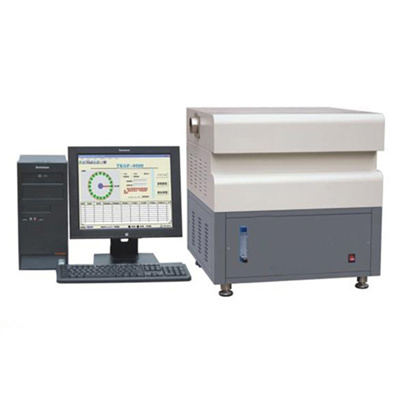 What is the input interface of the calorimeter?