Does the calorimeter need ventilation?
The calorimeter requires ventilation, which is a key prerequisite for ensuring experimental safety and accurate data. The calorimeter is mainly used to accurately measure the heat changes during the combustion and reaction of substances. The experimental process often involves flammable and explosive reagents or generates harmful gases. Ventilation conditions are directly related to the success or failure of the experiment and personnel safety.
First, the central role of ventilation in calorimeter experiments
From a safety perspective, some experimental samples will react violently during testing. If the heat accumulation cannot be dissipated in time, it is easy to cause damage to the instrument or even the risk of explosion. At the same time, the harmful gases such as carbon monoxide and sulfur dioxide generated by the experiment will pollute the laboratory environment and endanger the health of the operator if they are not discharged in time. In terms of data accuracy, good ventilation can maintain the temperature stability of the experimental environment, avoid interference with the accurate capture of heat by the instrument due to ambient temperature fluctuations, and ensure the authenticity of the measurement results.
Second, the specific requirements for ventilation of the calorimeter
1. Ventilation method selection: The combination of local ventilation and overall ventilation is preferred. Local ventilation can be used with the help of a fume hood to directly discharge harmful gases generated by the experiment; overall ventilation needs to ensure laboratory air circulation, which can be achieved by installing an exhaust fan to ensure that the indoor air is ventilated 6-8 times per hour.
2. Ventilation equipment specifications: Ventilation equipment needs to have a stable wind speed, and the wind speed should be controlled at 0.5-1 m/s, which can effectively discharge harmful gases and will not interfere with the experimental samples due to excessive wind speed. At the same time, ventilation equipment needs to be regularly inspected to prevent blockage, air leakage and other problems from affecting the ventilation effect.
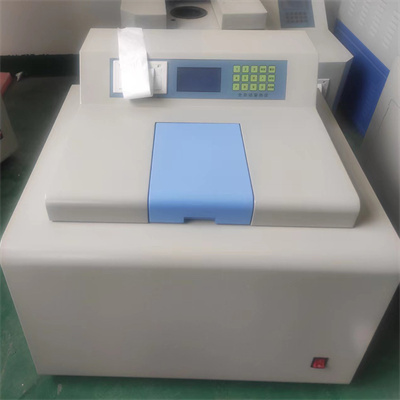
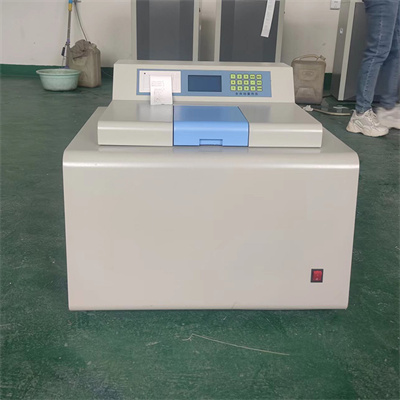
3. Operating environment requirements: The calorimeter should be placed away from closed corners to avoid placing in poorly ventilated areas such as corners and cabinets. A ventilation space of at least 30cm should be reserved around the instrument to ensure smooth air circulation.
III. The serious consequences of neglecting ventilation
If the ventilation requirements of the calorimeter are ignored, not only will the experimental data be biased and the true heat value of the sample cannot be accurately reflected, but also safety accidents may be caused. For example, when the experiment produces the accumulation of combustible gas, once it encounters the tiny spark generated by the operation of the instrument, it may cause a fire; the long-term accumulation of harmful gases will also cause irreversible damage to the operator's respiratory system and nervous system.
Summary: The ventilation of the calorimeter is an important link that cannot be ignored in the experimental operation. Strictly following the ventilation requirements can not only ensure the safety of the experiment, but also ensure the accuracy of the data. Operators must pay attention to ventilation specifications to lay a solid foundation for the smooth development of the experiment.
 How to read calorimeter data
 What is the design principle of a calorimeter?
 What is the harm of lack of water in the calorimeter?
 What is the input interface of the calorimeter?