What is the appropriate water temperature for the calorimeter?
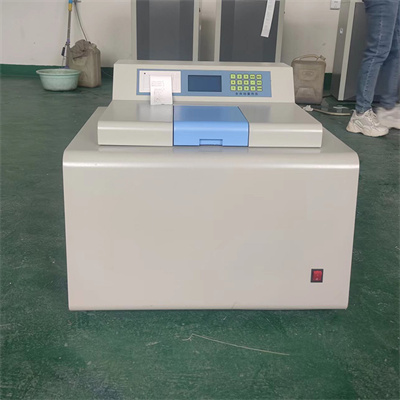
In all kinds of calorific value measurement experiments, the calorimeter plays a key role, and the control of its water temperature directly affects the accuracy of the experimental results. So, what is the appropriate water temperature for the calorimeter?
Conventional experimental water temperature range
Under normal circumstances, the initial water temperature of the calorimeter is recommended to be controlled at 18-25 ° C. This temperature range can provide a stable environment for heat transfer, and avoid abnormal heat exchange due to high or low water temperature, which affects the measurement accuracy. For example, when measuring the calorific value of solid fuels such as coal, this temperature range can ensure that the heat is fully absorbed by the water, making the data more reliable.
Special sample water temperature adjustment
For special samples, the water temperature needs to be adjusted flexibly. If the sample has a high calorific value, the initial water temperature can be appropriately reduced, such as at 15-20 ° C to prevent the water temperature from rising rapidly beyond the range of the instrument; if the sample has a low calorific value, the water temperature can be appropriately increased to 20-28 ° C to enhance the heat absorption effect and ensure that minor heat changes can be accurately captured.
Water temperature stability is crucial
In addition to the water temperature range, the stability of the water temperature is also critical. During the experiment, the fluctuation of water temperature should be controlled within ± 0.1 ° C. This requires a stable laboratory environment temperature and a good constant temperature system for the calorimeter. A stable water temperature can ensure the consistency of heat transfer and make the experimental results more reproducible and comparable.
Precise control to ensure experimentation
In short, the appropriateness of the water temperature of the calorimeter depends on the success or failure of the experiment. Only by strictly following the conventional water temperature range, adjusting it flexibly according to the characteristics of the sample, and ensuring the stability of the water temperature can the calorimeter perform at its best, provide accurate and reliable data for the experiment, and help the scientific research and production work proceed smoothly.
 How to read calorimeter data
 What is the design principle of a calorimeter?
 What is the harm of lack of water in the calorimeter?
 What is the input interface of the calorimeter?