Which calorimeter is better?
In various scientific research and industrial production scenarios, calorimeters are the key equipment for measuring the heat of substances, and "which calorimeter is good" has become the core question of many consumers. If you want to choose a suitable high-quality calorimeter, you need to accurately judge from the core dimension. The following dry products can help you quickly grasp the purchase points.
Brand strength is the core guarantee
Well-known brands often rely on deep technical accumulation and perfect quality control system to guarantee product quality. Like domestic head brands, with accurate adaptation to domestic application scenarios, they have significant advantages in stability and after-sales response speed; international well-known brands have deep precipitation in high-precision detection technology, suitable for high-end scenarios with strict requirements for detection accuracy. When choosing, give priority to examining the brand's industry reputation, market share and after-sales guarantee policies to avoid frequent equipment failures and no after-sales doors due to insufficient brand strength.
Core performance determines use value
The core performance of a calorimeter is directly related to the accuracy and efficiency of the test results, and three major indicators need to be paid attention to. First, the detection accuracy, the detection error of a high-quality calorimeter needs to be controlled within the industry standard range, and the high-precision equipment can accurately capture subtle heat changes to meet the needs of scientific research-level detection; second, stability, the equipment needs to have good anti-interference ability, even under complex working conditions, it can maintain stable operation to avoid environmental fluctuations affecting the detection results; third, detection efficiency, efficient calorimeter can shorten the single detection cycle, adapt to batch detection needs, and improve overall work efficiency.
Adaptation requirements are a prerequisite for purchasing
The demand for calorimeters varies significantly in different scenarios, and blindly pursuing high-end configurations will only increase costs. If it is used for routine industrial testing, choose a basic model with practical functions and convenient operation; if it is used for scientific research experiments, it needs to focus on the accuracy, resolution and extended functions of the equipment; if frequent mobile testing is required, a portable calorimeter is more suitable. In addition, it is also necessary to combine the characteristics of the sample to be tested to select the model with the corresponding range and suitable accessories to ensure that the equipment and testing requirements are perfectly matched.
After-sales and cost performance cannot be ignored
High-quality after-sales service can escort the use of equipment. It is necessary to confirm whether the brand provides door-to-door installation, technical training, regular calibration and quick maintenance services to avoid delaying the work progress when equipment problems occur. At the same time, cost performance is not a simple low price, but on the basis of meeting performance and adaptation needs, comprehensively consider equipment prices, consumables costs and maintenance costs, and choose the best comprehensive cost solution, rather than blindly pursuing low prices at the expense of core performance.
In short, to determine which calorimeter is good, it is necessary to comprehensively consider the brand strength, core performance, demand adaptation, after-sales and cost-effectiveness. Combined with its own actual scene, accurately match the core requirements, in order to choose a truly high-quality and suitable calorimeter, and lay a solid foundation for the detection work.
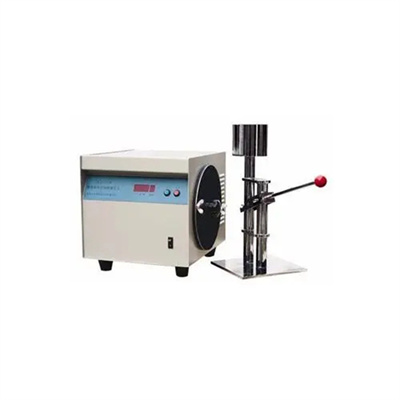
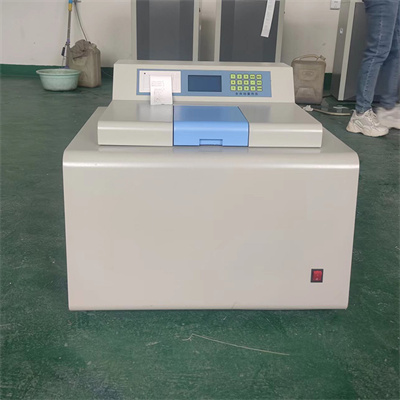 How to read calorimeter data
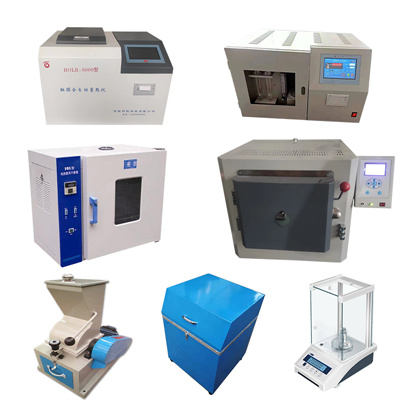 What is the design principle of a calorimeter?
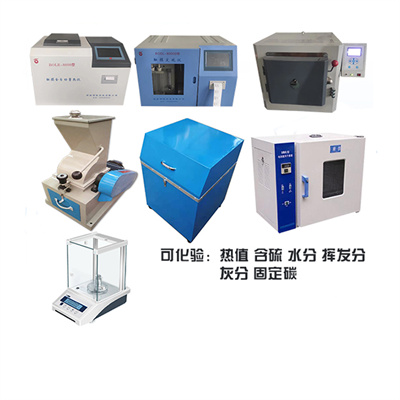 What is the harm of lack of water in the calorimeter?
 What is the input interface of the calorimeter?