Do you need to change the water for the calorimeter?
The core judgment basis for whether the calorimeter needs to change the water
Whether the calorimeter needs to change the water depends on the working state of the water bath system. Most calorimeters maintain a constant temperature environment through the water bath. If the water quality deteriorates (such as turbidity, impurity precipitation), or the water temperature stability decreases, it will directly affect the heat transfer accuracy and cause the detection results to be distorted. At this time, the water must be changed in time.
Three typical scenarios in which water must be changed
1. When the water quality is abnormal: When it is observed that the water in the water bath is turbid, there is floating matter or precipitation, indicating that the impurities in the water have interfered with heat conduction, it is necessary to replace the clean water source immediately to avoid polluting the internal piping of the instrument.
2. When the detection accuracy decreases: if the same sample is tested multiple times, the result deviation exceeds the allowable range. After excluding the sample and operation problems, there is a high probability that the water quality of the water bath is aging. Changing the water can restore the detection stability of the instrument.
3. Regular maintenance cycle: Even if there is no significant change in water quality, it is recommended to replace the water bath every 3-6 months according to the frequency of use of the instrument. This is the basic maintenance measure to ensure the long-term accurate operation of the calorimeter.
Standard operating procedures for changing water in a calorimeter
1. Power off cooling: Turn off the power of the instrument first, and wait for the temperature of the water bath to drop to room temperature to avoid burns or damage to the instrument parts caused by high temperature water change.
2. Empty the old water: Open the drain valve of the water bath, completely empty the old water, and wipe the inner wall of the tank with a clean soft cloth to remove residual scale and impurities.
3. Inject new water: Inject purified water or distilled water that meets the requirements. The water level should be strictly controlled within the scale range of the water bath. Too high or too low will affect the constant temperature effect.
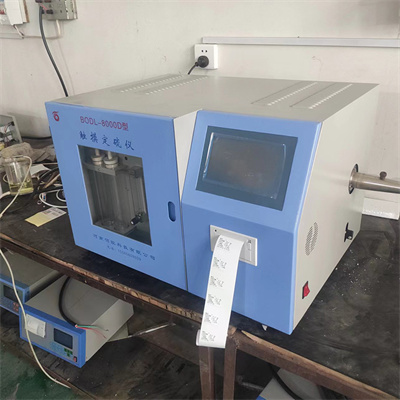
4. Boot calibration: After adding water, turn on the power supply, wait for the water temperature to stabilize to the set value, perform instrument calibration, and confirm that the detection accuracy is normal before it can be put into use.
Precautions for maintenance after water change
After changing the water, it is necessary to regularly observe the water quality status. If the water body is found to be slightly turbid, it should be replenished or replaced with new water in time. At the same time, avoid using hard water such as tap water to prevent scale accumulation from blocking the pipeline and affecting the service life and detection accuracy of the calorimeter. Regular water change and water quality control are the core prerequisites for ensuring the stable operation of the calorimeter.
 How to read calorimeter data
 What is the design principle of a calorimeter?
 What is the harm of lack of water in the calorimeter?
 What is the input interface of the calorimeter?