How long is the calorimeter ignition wire?
In the use of the calorimeter, the length of the ignition wire is one of the core elements to ensure the accuracy and stability of the experiment. If the length is not properly controlled, it is easy to cause ignition failure, data deviation and other problems. The following is a detailed disassembly of the relevant knowledge for you.
First, the standard length range
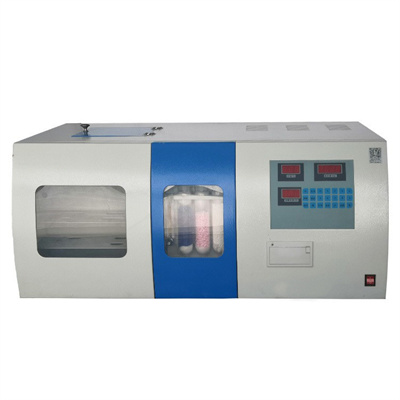
The standard length of the ignition wire of a calorimeter is not a fixed value, but needs to be determined comprehensively in combination with the instrument model and the structure of the oxygen bomb. Taking a common fully automatic calorimeter as an example, the length of the ignition wire is usually controlled at 40-60mm, which can ensure that the ignition wire is in full contact with the sample, while avoiding short circuit contact with the inner wall of the oxygen bomb, and ensuring the ignition success rate.
Second, the core basis for length selection
1. Match the size of the oxygen bomb: For different specifications of oxygen bombs, there are differences in the internal space. The length of the ignition wire needs to be adapted to the spacing of the oxygen bomb electrodes to ensure that the two ends are firmly connected, and the middle is suspended and can accurately cover the sample area to prevent ignition interruptions due to insufficient length.
2. Adapt to sample characteristics: For flammable and fast-burning samples, the length of the ignition wire can be appropriately shortened to reduce the ignition energy loss; if the sample is difficult to burn, it is necessary to ensure that the length of the ignition wire is sufficient, improve the ignition intensity, and ensure that the sample is fully burned.
III. Installation and adjustment points
When installing the ignition wire, it is necessary to firmly fix the two ends on the oxygen bomb electrode to avoid loosening and falling off. Then adjust the length to ensure that the ignition wire and the sample maintain a reasonable distance of 1-2mm, neither will it burn in advance due to too close distance, nor will it fail to ignite the sample due to too far distance. After the installation is completed, an ignition test is required. If the ignition fails, check whether the length is up to standard in time.
IV. Avoiding Common Misunderstandings
Many users cut the length of the ignition wire at will for the convenience of the picture, which has great hidden dangers. If the ignition wire is too long, it is easy to contact the inner wall of the oxygen bomb, causing a short circuit and damaging the instrument; if it is too short, it cannot effectively ignite the sample, resulting in distortion of the experimental data. Be sure to precisely control the length of the ignition wire in strict accordance with the requirements of the instrument manual to ensure the smooth progress of the experiment.
Mastering the reasonable length of the ignition wire of the calorimeter can not only improve the experimental efficiency, but also ensure the accuracy of the data. It is recommended to check the length of the ignition wire regularly, and adjust it flexibly according to the characteristics of the instrument and sample, so that the calorimeter is always in the best operating state.
 How to read calorimeter data
 What is the design principle of a calorimeter?
 What is the harm of lack of water in the calorimeter?
 What is the input interface of the calorimeter?