How to analyze an accelerated calorimeter
Accelerated calorimeter, as the core equipment in the field of thermal analysis, plays a key role in material thermal stability, reaction heat determination and other scenarios with its accurate and efficient characteristics. To make good use of it, you need to master from principle to practical operation system. The following is your detailed disassembly and analysis process.
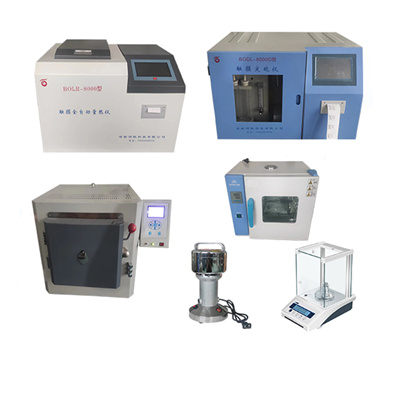
First, clarify the core principles and lay the foundation for analysis
The core logic of the accelerated calorimeter is to monitor the heat change of the sample and the reference material in real time under a controlled temperature rise or constant temperature environment, capture the temperature difference signal through the thermocouple, and then convert it into a heat flow curve through the data processing system. This "dynamic monitoring + precise quantification" mode can intuitively show the endothermic and exothermic processes of the sample, providing data support for analyzing the thermal behavior of the material.
Second, standardize the operation steps to ensure accurate data
Before operation, make preparations: first calibrate the instrument to ensure that the accuracy of the temperature sensor and heat flow sensor is up to standard; then select a clean and dry sample crucible, and weigh an appropriate amount of sample according to the standard to avoid too much or too little sample affecting the results. When loading the sample, the sample should be evenly spread on the bottom of the crucible, and the reference material (usually inert material) should be loaded into another crucible and placed in the designated position of the instrument.
After starting the instrument, set the heating rate, temperature range and other parameters according to the characteristics of the sample. During the heating process, the instrument will record the heat change in real time. The operator needs to pay close attention to the curve trend. If there is any abnormal fluctuation, it is necessary to check whether the sample is improperly loaded and the instrument is faulty in time.
III. Accurate interpretation of data and mining of core information
After the experiment, the software will generate key graphs such as heat flow-temperature curve and heat flow-time curve. When analyzing, focus on the peak, valley, and inflection point of the curve: the peak corresponds to the exothermic or endothermic reaction point of the sample, and the reaction temperature can be judged accordingly; the slope of the curve reflects the reaction rate, and the greater the slope, the more severe the reaction.
At the same time, the core parameters such as reaction heat and specific heat capacity are calculated in combination with the curve. If there are multiple peaks in the curve, the reaction stages corresponding to each peak need to be analyzed one by one to clarify the thermal behavior of the sample at different temperatures, so as to provide a basis for material research and development and quality control.
Fourth, troubleshoot common problems and improve analysis efficiency
If there is a large fluctuation in the curve, it may be that the sample is damp and unevenly filled, so the sample needs to be re-dried and the sample needs to be standardized; if the temperature deviation is large, the instrument temperature sensor needs to be re-calibrated. Daily instrument cleaning and maintenance, regular inspection of sensors and heating elements, can greatly reduce failures and ensure efficient analysis.
Mastering the analysis method of the acceleration calorimeter can not only accurately obtain thermal analysis data, but also provide reliable support for material research and development and process optimization, and help related work to be carried out efficiently.
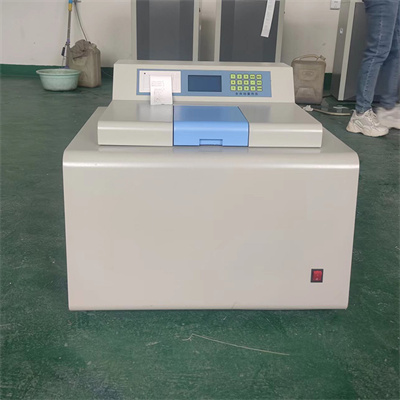 How to read calorimeter data
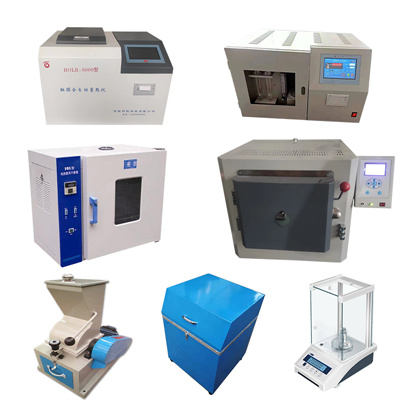 What is the design principle of a calorimeter?
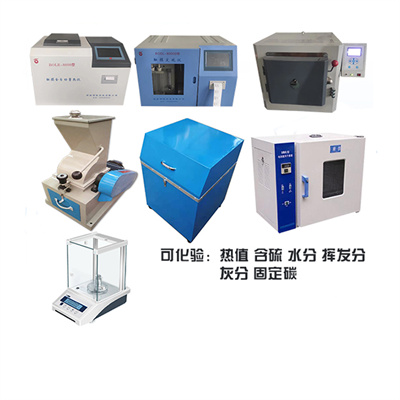 What is the harm of lack of water in the calorimeter?
 What is the input interface of the calorimeter?