How to connect the calorimeter tube?
Preparation: Clarifying tools and components
Before connecting the calorimeter pipe, it is necessary to prepare the required tools, such as wrenches, raw material belts, etc., and carefully check the pipes, joints and other components to ensure that the model matches and is not damaged or deformed, so as to build a solid foundation for subsequent connections.
Step 1: Clean the nozzles and fittings
Wipe the pipe port and the inner wall of the joint carefully with clean gauze to thoroughly remove dust, oil and other impurities to avoid impurities entering the pipeline affecting the accuracy of the instrument or causing the interface to be loosely sealed.
Step 2: Wrap the raw material tape (for the threaded interface)
If the interface is a threaded structure, on the external thread of the pipe, evenly wrap the raw material tape in a clockwise direction, and the number of winding turns is controlled at 5-8 turns to ensure that the raw material tape fits smoothly to prevent liquid or gas leakage and improve the sealing of the interface.
Step 3: Precise docking of pipelines
Align the treated pipe with the joint, screw it in slowly, and keep the force uniform during operation to avoid damage to the pipe or joint due to excessive force. When using the wrench, pay attention to control the force to prevent the thread from slipping and ensure that the pipe is tightly connected to the joint.
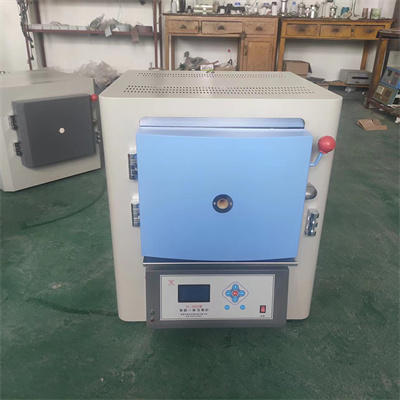
Step 4: Check the connection effect
After the connection is completed, conduct a preliminary inspection, and gently pull the pipe to confirm that the connection is firm and not loose. For pipelines that transport liquids, a small amount of medium can be inserted to observe whether there is leakage at the interface. If there is any leakage, adjust or reinstall it in time to ensure the quality of the connection.
Notes: Ensure reliable connection
During the connection process, strictly follow the operating specifications of the calorimeter to avoid damage to the instrument due to improper operation. At the same time, regularly check the connection status of the pipeline, detect and deal with problems such as looseness and leakage in time, ensure the stable operation of the calorimeter, and provide protection for accurate measurement.
 How to read calorimeter data
 What is the design principle of a calorimeter?
 What is the harm of lack of water in the calorimeter?
 What is the input interface of the calorimeter?